 By st20113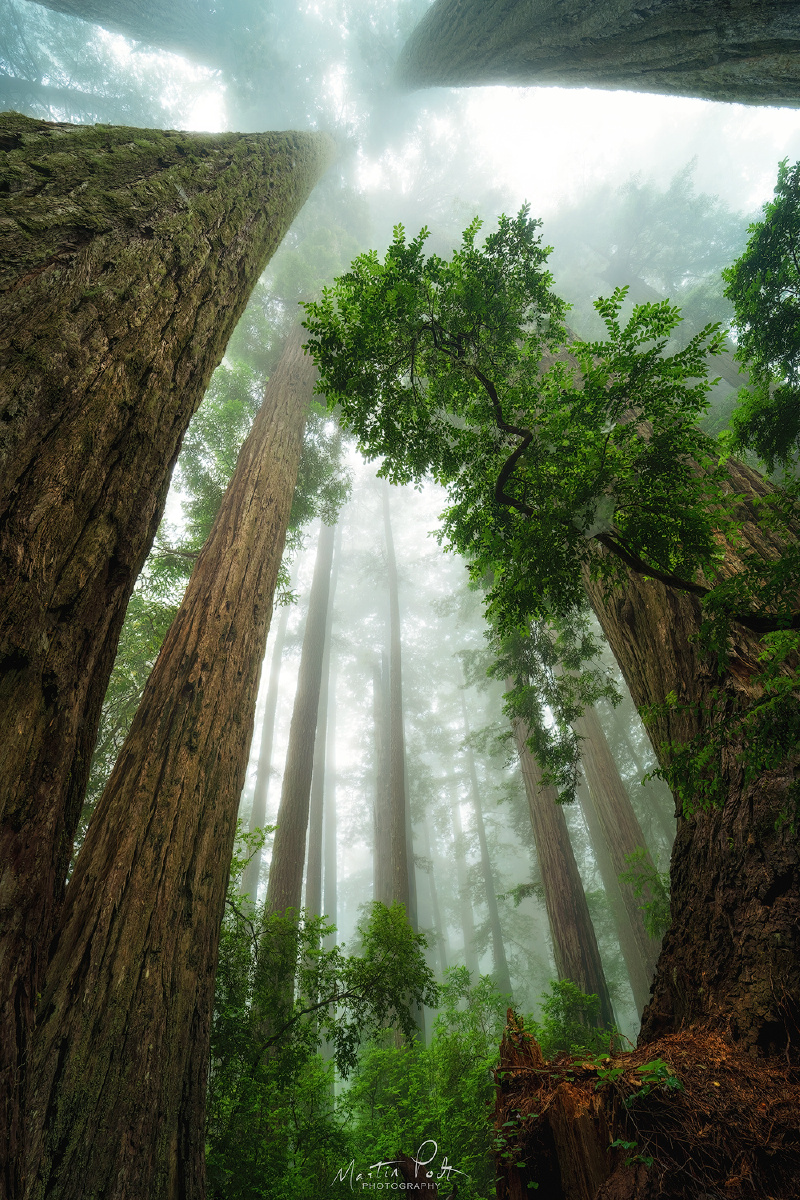
The Coast Redwood (Sequoia sempervirens) is the tallest living tree species on Earth, with specimens exceeding 100 meters in height and trunk diameters surpassing 10 meters. These ancient forest giants grow only in the narrow fog-belt zone along the Pacific coast of northern California and southern Oregon, forming one of the most spectacular and ecologically rich forests on the planet.
Physical Characteristics
Coast Redwoods are the tallest trees on Earth, with the current record holder named Hyperion standing at 115.92 meters. These trees can live for more than 2,000 years, with the oldest known specimen at approximately 2,200 years old. Their thick, fibrous, fire-resistant bark – which can reach 30 centimeters in thickness – protects them from the frequent wildfires that are a natural part of their ecosystem.
The crown of a mature Redwood is narrow and columnar, with upswept branches. The trees have a shallow, wide-spreading root system – typically only 3 to 6 meters deep – but the roots interlock with neighboring trees, creating a forest-wide support network that helps trees withstand strong winds.
Redwoods reproduce through both seeds and sprouts. After a fire or physical damage, stumps and roots frequently produce new shoots (called “coppicing”), creating distinctive clusters of trees that are genetically identical clones – the original “tree” may be thousands of years old despite appearing as young sprouts.
Habitat and Fog Dependency
Redwood forests thrive in the coastal fog zone, where summer fog condenses on the needles and drips to the ground, effectively doubling the effective rainfall in some areas. This fog drip can contribute significantly to the forest’s water supply during the dry summer months, when rainfall is negligible.
The Redwood Ecosystem is one of the most productive and biodiverse temperate forests on Earth. The multilayered canopy, fern understory, and fallen giant logs create microhabitats for a remarkable diversity of species, including the Northern Spotted Owl, which nests exclusively in old-growth Redwood forests.
Conservation
Once covering approximately 800,000 hectares, old-growth Redwood forests have been reduced to less than 5% of their original range by logging. Protected areas include Redwood National and State Parks, but much of the remaining old-growth forest exists in fragmented patches on private land. Conservation efforts focus on protecting remaining old-growth stands and restoring logged areas through active reforestation.
[…] would be too dry for such massive organisms in any other region. As a foundation species of the temperate rainforest ecosystem, the coast redwood supports an extraordinary web of life found nowhere else on Earth, and […]