 By st20113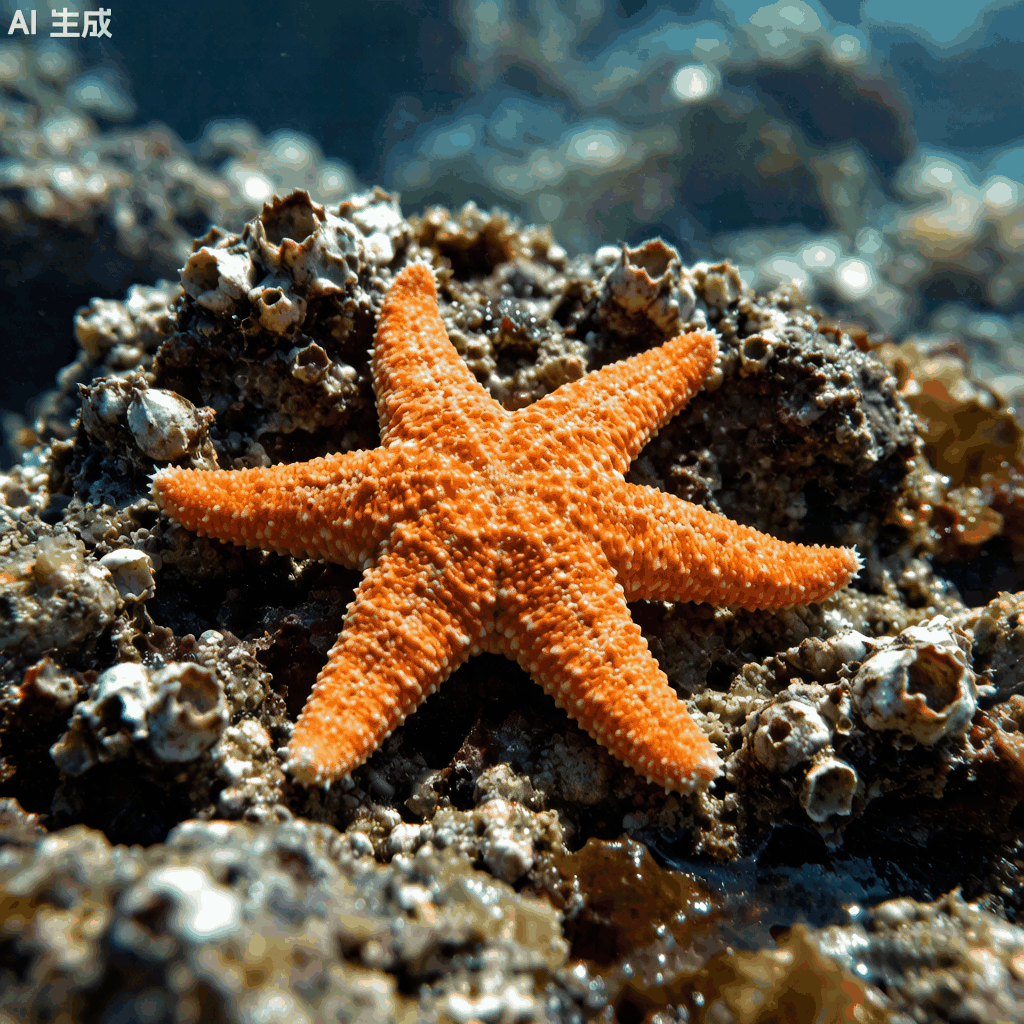
Introduction
The common starfish, scientifically known as Asterias rubens, is one of the most familiar and widely distributed marine invertebrates in the cold and temperate waters of the North Atlantic and adjacent seas. Often encountered by beachcombers clinging to rocks at low tide or slowly traversing the floors of tide pools, this recognizable echinoderm has become a symbol of the rich biodiversity found in coastal marine ecosystems. Despite its seemingly simple radial body plan, the common starfish is a sophisticated predator with remarkable physiological capabilities, including a unique hydraulic system for locomotion, an extraordinary ability to regenerate lost arms, and a feeding mechanism that defies conventional vertebrate biology. Found from the intertidal zone down to depths of approximately 200 meters, Asterias rubens plays a significant ecological role in structuring benthic communities, particularly as a predator of mussels and other shellfish.
The common starfish belongs to the phylum Echinodermata and the class Asteroidea, the group that includes all true starfish. With its characteristic five-arm body plan and vibrant orange to reddish-brown coloration, Asterias rubens is a keystone species in many rocky shore and shallow subtidal ecosystems. Its presence or absence can dramatically alter the composition of marine communities, as it helps maintain the balance between competing species and prevents the overgrowth of filter-feeding organisms such as mussels. Understanding the biology, behavior, and ecological importance of this species provides valuable insight into the functioning of coastal marine ecosystems and the intricate food webs that sustain ocean life.
Taxonomy
Asterias rubens is classified within the phylum Echinodermata, a diverse group of marine animals that includes sea urchins, sand dollars, sea cucumbers, feather stars, and brittle stars, in addition to starfish. Echinoderms are distinguished by their pentaradial symmetry, a unique water vascular system, and calcareous ossicles embedded in their skin. Within Echinodermata, Asterias rubens belongs to the class Asteroidea, the order Forcipulatida, and the family Asteriidae. The genus name Asterias derives from the Greek word for star, while the species name rubens means reddish or ruddy, a reference to the animal’s characteristic coloration.
The genus Asterias includes several closely related species that can be difficult to distinguish from one another in the field. Asterias rubens is primarily found in the waters of the North Atlantic, from the Arctic seas off Norway and Greenland south to the Canary Islands and the Mediterranean. Related species include Asterias forbesi, which occupies similar ecological niches along the western Atlantic coast of North America, and Asterias amurensis, a native of the North Pacific that has become a highly invasive species in Australian waters following its introduction through ballast water discharge. These closely related species demonstrate how echinoderms have diversified across different ocean basins, each adapting to local environmental conditions and prey communities.
Physical Characteristics
The common starfish has the iconic five-armed body plan that defines most true starfish, with arms radiating from a central disc. Adult specimens typically measure between 10 and 30 centimeters in diameter, though some individuals can grow considerably larger, with arm spans reaching up to 50 centimeters in exceptional cases. The upper surface of the body, known as the aboral surface, is rough to the touch due to the presence of numerous small calcareous plates and spines that provide protection from predators. The coloration of Asterias rubens is highly variable, ranging from shades of orange and reddish-brown to purple, with the underside of the arms typically being paler than the dorsal surface. This coloration serves as a form of camouflage against the rocky substrates and mussel beds where the species is most commonly found.
Beneath the arms and central disc lies the oral surface, which is covered with thousands of tube feet arranged in rows along each arm. These tube feet are part of the starfish’s remarkable water vascular system, a network of fluid-filled canals that functions as a hydraulic locomotion and feeding mechanism. Each tube foot consists of a flexible podium that can extend and contract, creating suction when retracted against a surface, allowing the starfish to cling to rocks and move with surprising agility across uneven substrates. At the tip of each arm is a small cluster of pigmented sensory cells that function as primitive eyespots, capable of detecting light and darkness but not forming detailed images. The mouth is located at the center of the oral surface, surrounded by a ring of soft tissue from which the tube feet extend in rows along each arm.
Habitat and Distribution
Asterias rubens is one of the most widely distributed echinoderms in the North Atlantic, with a geographic range that extends from the Arctic Ocean and the Barents Sea in the north to the Azores, the Canary Islands, and the Mediterranean Sea in the south. Within this range, the species is found along the coasts of Scandinavia, the British Isles, the Netherlands, Belgium, France, Spain, and Portugal, as well as along the Atlantic coast of North America from the Canadian maritime provinces to North Carolina. The species is particularly abundant in areas with rocky substrates, mussel beds, and other complex benthic environments that provide both food and shelter.
The common starfish occupies a wide range of marine habitats, from the high intertidal zone where it must contend with regular exposure to air during low tides, to shallow subtidal waters and deeper offshore environments down to approximately 200 meters. In the intertidal zone, Asterias rubens is commonly found in tide pools and among mussel beds, where it preys on the dense concentrations of mollusks that characterize these habitats. In deeper waters, the species is more likely to be found on rocky reefs, cobble substrates, and areas where sessile invertebrates such as barnacles and sea squirts provide food sources. The species is tolerant of a wide range of salinities and is frequently found in brackish waters near river mouths, though it thrives best in fully marine conditions with stable salinity levels.
Diet and Behavior
Asterias rubens is a voracious predator and an opportunistic scavenger, feeding primarily on bivalve mollusks including mussels, oysters, clams, and scallops. Its diet also includes barnacles, sea snails, and other slow-moving or sessile invertebrates, as well as dead and decaying organic matter. The starfish’s feeding strategy is extraordinary and differs fundamentally from that of most animals. When attacking a bivalve, the starfish uses its tube feet to grip the two halves of the shell and applies sustained pulling force, gradually exhausting the mollusk’s adductor muscles until the shell valves begin to separate. This process can take several hours, during which the starfish maintains a firm grip on the prey. Once the shell opens even slightly, the starfish everts its stomach through its mouth and inserts it into the gap, releasing digestive enzymes that dissolve the soft tissues of the prey within its own shell.
The behavior of the common starfish is characterized by deliberate, methodical movement and a preference for nocturnal activity in some habitats, though it can be observed foraging during the day as well. Individual starfish are capable of traveling considerable distances in search of food, moving at speeds of up to several meters per minute using coordinated waves of tube foot extension and retraction. Asterias rubens is also highly territorial in areas of high food availability, with larger individuals actively displacing smaller ones from productive feeding grounds. The species is sensitive to environmental conditions and will move to deeper water or seek shelter in crevices during periods of extreme temperature or salinity stress.
Reproduction
Reproduction in Asterias rubens occurs through external spawning, in which males and females release their gametes directly into the surrounding water column where fertilization takes place. The timing of spawning is typically synchronized with seasonal environmental cues such as water temperature, day length, and food availability, with peak spawning activity occurring in the spring and summer months in most parts of the species’ range. Females are capable of producing millions of eggs during a single spawning event, releasing them in batches over several days to maximize the chances of successful fertilization. Males release their sperm in similar fashion, and the fertilized eggs are carried by ocean currents as part of the planktonic community.
The fertilized eggs of Asterias rubens develop into bipinnaria larvae, a distinctive planktonic form characterized by two bands of cilia used for swimming and feeding on microscopic phytoplankton. The bipinnaria larva undergoes a series of morphological changes over the course of several weeks to months, eventually transforming into a brachiolaria larva before settling to the seafloor and metamorphosing into a juvenile starfish with a complete set of five arms. One of the most remarkable aspects of starfish biology is the ability to regenerate lost arms. If an arm is detached from the body, the remaining central disc can regrow a complete new arm, and in some cases a fully detached arm can regenerate an entire new individual if it contains a portion of the central disc. This regenerative capacity allows Asterias rubens to recover from injuries inflicted by predators or physical disturbances.
Conservation Status
Asterias rubens is listed as a species of Least Concern by the International Union for Conservation of Nature (IUCN), reflecting its wide distribution, large population sizes, and apparent resilience to environmental disturbances. The species is not currently subject to any targeted commercial harvesting or conservation programs in most parts of its range, and it is considered a natural component of healthy coastal marine ecosystems. However, like all marine organisms, Asterias rubens faces potential threats from climate change, ocean acidification, pollution, and habitat loss.
Ocean acidification, caused by the absorption of atmospheric carbon dioxide by seawater, poses a particular risk to echinoderms because it reduces the availability of carbonate ions needed to build and maintain their calcareous skeletons and spines. Warmer ocean temperatures can alter the geographic range and seasonal activity patterns of Asterias rubens, potentially shifting its distribution northward in response to warming waters. In some regions, the common starfish is considered a pest by shellfish farmers, as it can cause significant economic losses by preying on farmed oysters, mussels, and clams. Control measures employed by aquaculture operations include physical removal, barriers, and in some cases chemical treatments, though these methods can have unintended effects on non-target species and overall ecosystem health.
Fun Facts
One of the most astonishing facts about Asterias rubens is its ability to regenerate entire arms and, in some cases, to regenerate an entirely new individual from a single detached arm. This remarkable regenerative capacity is made possible by the presence of a distributed nervous system and a rich supply of stem cells throughout the body that can differentiate into any required tissue type. Scientists studying the regenerative biology of starfish hope that understanding the mechanisms behind this extraordinary ability may provide insights into tissue regeneration and wound healing in other animals, including humans.
The common starfish’s feeding mechanism is one of the most unusual in the animal kingdom. Rather than ingesting food and digesting it internally, Asterias rubens everts its stomach through its mouth and digests its prey externally, a process that allows it to consume prey much larger than its mouth opening would normally permit. In areas where Asterias rubens populations are abundant, they can significantly influence the structure of benthic communities by controlling the populations of mussels and other shellfish. In some European countries, including France and the Netherlands, the common starfish has been studied as a biological control agent for invasive mussel species, demonstrating its potential value in ecosystem management.
[…] Their larvae are bilateral and free-swimming, quite unlike the radially symmetric adults. The Common Starfish shares its phylum with sea urchins and feather stars, both familiar inhabitants of North Atlantic […]