 By st20113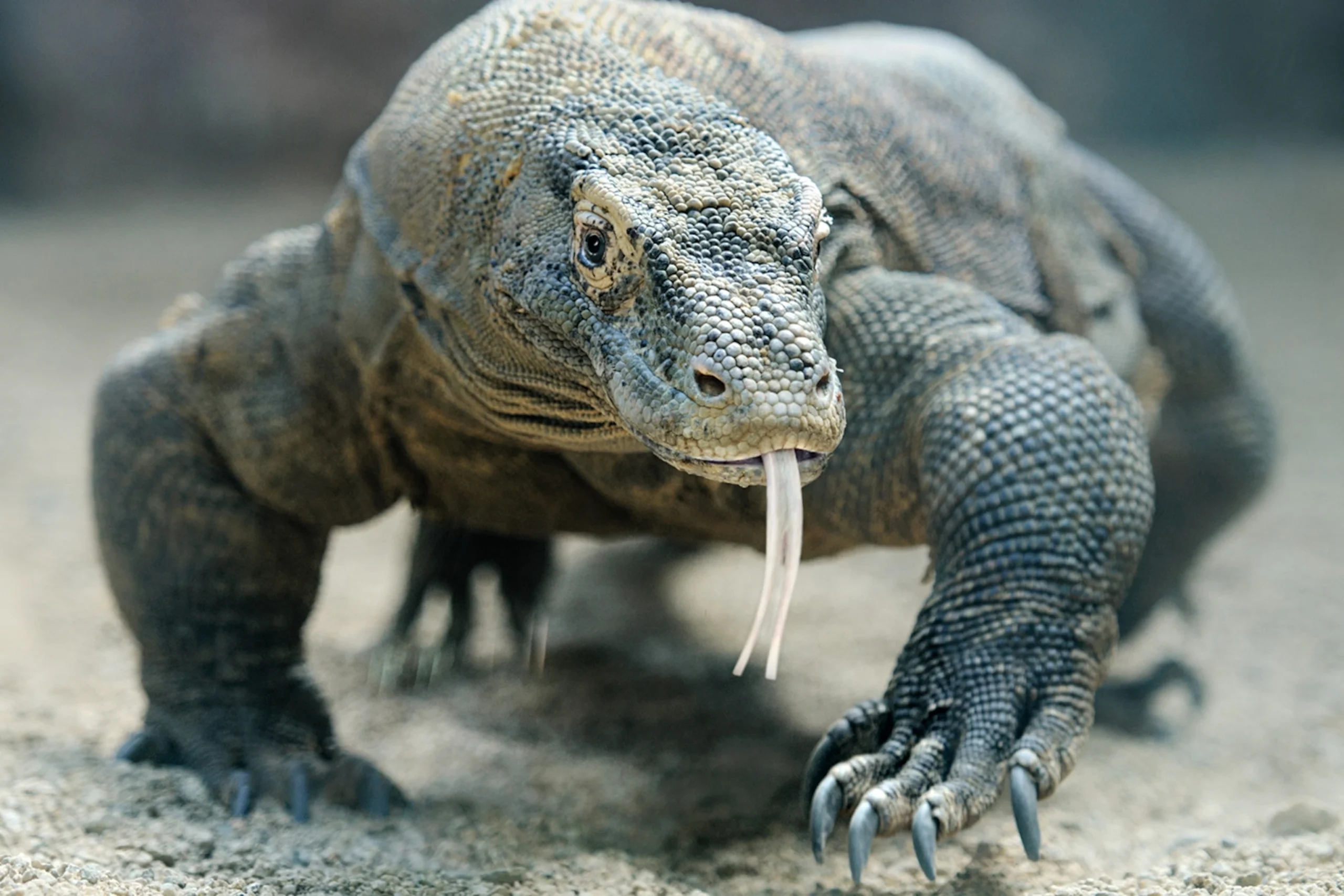
The Komodo Dragon (Varanus komodoensis) is the world’s largest living lizard — a fearsome, monitor lizard that can grow to over 3 meters (10 feet) in length and weigh up to 90 kg (200 lbs). Found only on five Indonesian islands in the Lesser Sunda archipelago — Komodo, Rinca, Flores, Gili Motang, and Nusa Kode — the Komodo Dragon is a living relic of a vanished era: a giant species that survived the Pleistocene extinctions that eliminated most other megafauna from the Australian-Indonesian region. For decades, the Komodo Dragon’s hunting strategy baffled scientists: how could such a large, seemingly clumsy animal capture agile prey such as deer, goats, and water buffalo? The answer, discovered through research in the 1980s and 1990s, was even more extraordinary than imagined — Komodo Dragons kill through a combination of toxic bacteria in their saliva and a potent venom delivered through their bite, a killing strategy unique in the animal kingdom and one of the most remarkable evolutionary adaptations among living reptiles.
Venomous Bite and Hunting Strategy
The Komodo Dragon’s killing mechanism involves a combination of mechanical damage, toxic bacteria, and — most remarkably — venom. The dragon’s jaw contains numerous large, serrated teeth designed to tear flesh and cause deep, gaping wounds. These wounds are colonized by over 50 species of highly pathogenic bacteria found in the Komodo Dragon’s saliva — bacteria that cause rapid and severe sepsis (blood poisoning) in prey animals, leading to death within 24 hours of a bite. But the bacteria story was only half the answer. In 2009, researchers discovered that Komodo Dragons also possess venom glands that produce a cocktail of toxins that cause anticoagulation (preventing blood clotting), vasodilation (lowering blood pressure through widening blood vessels), and paralysis. The combination of traumatic tissue damage, septicemia from oral bacteria, and venom-induced shock makes the Komodo Dragon one of the most effective terrestrial predators on Earth.
Komodo Dragons are opportunistic ambush predators. They lie in wait near game trails — often for hours — before launching a sudden, explosive attack at speeds of up to 20 km/h. After delivering a bite, the dragon retreats and follows the wounded prey from a distance, relying on its victim’s rapid deterioration from the septic/venomous bite to bring it down. This “bite-and-follow” strategy minimizes the risk of injury to the dragon during the initial attack — an important consideration given that even large prey like water buffalo can seriously injure or kill a Komodo Dragon with kicks or horns. When the prey collapses — which may take hours or even days — the Komodo Dragon uses its sharp claws and serrated teeth to dismember it, consuming up to 80% of its body weight in a single meal and then not feeding again for weeks or months.
Island Biogeography and Evolution
The Komodo Dragon’s very existence is a product of island biogeography — the branch of ecology that studies how island isolation shapes the evolution and ecology of species. The islands that Komodo Dragons inhabit were connected to the Asian mainland during periods of low sea level during the Pleistocene ice ages, allowing Komodo ancestors — medium-sized monitor lizards — to colonize the islands from mainland Asia. When sea levels rose after the last glacial maximum, these islands became isolated, and their unique assemblages of species — including the Komodo Dragon and the small endemic dwarf elephant Stegodon — evolved in isolation. The dwarf elephant became extinct, but the Komodo Dragon thrived as an apex predator in an ecosystem with no other large carnivores. This evolutionary history is a powerful illustration of how island isolation creates unique evolutionary trajectories — the same process that produced the flightless birds of New Zealand, the lemurs of Madagascar, and the ecosystems of the Galápagos Islands that inspired Darwin’s theory of natural selection.
The ecosystem role of the Komodo Dragon parallels that of other apex predators like the Tiger, Lion, and Polar Bear: as the dominant predator in its island environment, the Komodo Dragon regulates prey populations (primarily deer, goats, and water buffalo) and shapes the structure of the island ecosystem. The dragon’s role as an apex predator means it has no natural predators on these islands — except humans — and its population density is therefore limited primarily by food availability. Komodo Dragons are currently classified as Endangered by the IUCN, with declining populations threatened by habitat loss (volcanic activity and human development), prey depletion, illegal poaching, and the impacts of climate change on the coastal marine ecosystems that surround their island home.
Climate and Conservation Challenges
Komodo Dragons face several interconnected threats that underscore the broader challenges facing endangered megafauna worldwide. Rising sea levels — driven by climate change and the expansion of the Water Cycle through glacial melt and thermal expansion of ocean water — threaten to inundate the low-lying coastal areas of Komodo and other islands where the dragons hunt and nest. Climate change is also affecting monsoon patterns and precipitation in the Indonesian archipelago, potentially altering the availability of prey species and the moisture conditions that affect Komodo Dragon egg development and nesting success. As with all island-endemic species — the Red Panda in the Himalayas, the Orangutan in Borneo’s shrinking forests — the Komodo Dragon’s restricted range makes it acutely vulnerable to environmental change, and its conservation will require protecting both the species itself and the complex island ecosystems on which it depends.
can imitate the appearance and behavior of venomous animals — flattening its body to look like a lionfish, extending arms to mimic sea snakes, or changing color to match jellyfish — as a form of active
[…] The same tropical rainforest ecosystems that support Red-Eyed Tree Frog populations also support Komodo Dragons (in the Indonesian rainforests that extend across the Wallace Line), and the conservation of both […]
[…] swim in the open ocean and forage on the seafloor is unparalleled among lizards globally. Like the Komodo Dragon, the world largest living lizard, the Marine Iguana demonstrates how island isolation and natural […]
beetles approximately 20 to 30 million years ago. Other remarkable tropical megafauna include the Komodo dragon and the African elephant, representing the incredible diversity of large animals that evolved in
[…] iguana, reflects its status as the type species of the genus. Closely related reptiles include the Komodo dragon only in the broad sense of being squamates, while true iguanids are mostly herbivorous New World […]
[…] Nile Monitor is one of Africa’s largest lizards, a powerful, semi-aquatic reptile that haunts the rivers, […]