 By Iris
Pentalagus furnessi | Amami Rabbit
Species Profile · Leporidae
Amami Rabbit
A rabbit from two Japanese islands, with short ears and claws that never stop growing.
Endangered
Length
Weight
Ears
Litter
Range
Rating
Two islands, one rabbit
A rabbit that digs like a machine
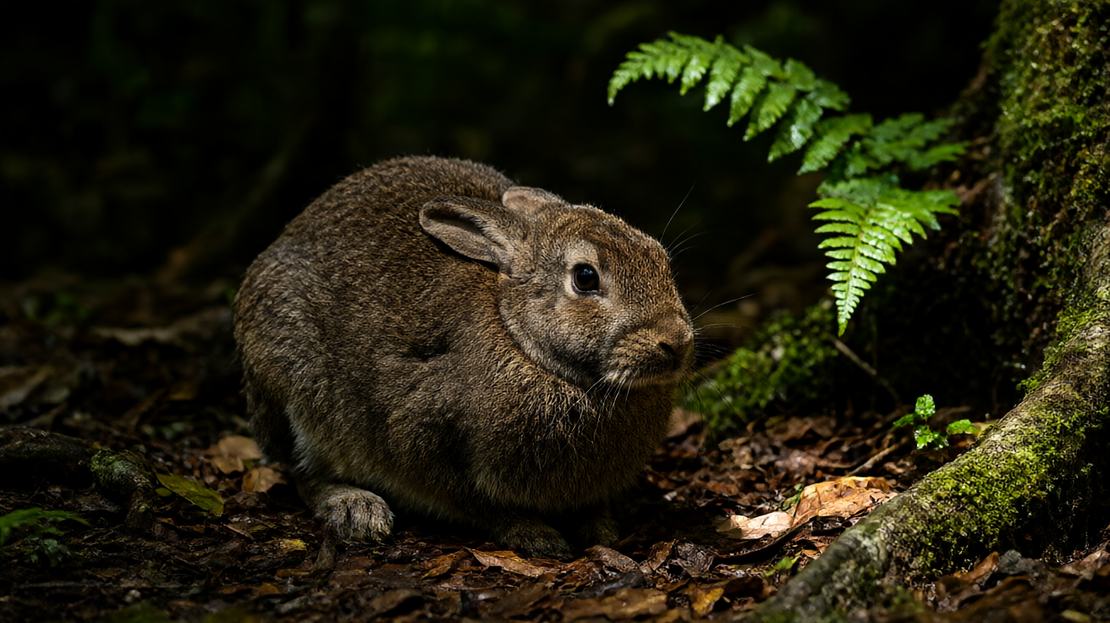
A rabbit with short ears and heavy claws steps out of the dark undergrowth. It lives on two small islands south of Japan. Nowhere else on earth holds this animal. Amami rabbits feed at night and rest by day. Adults run 40 to 50 cm long.
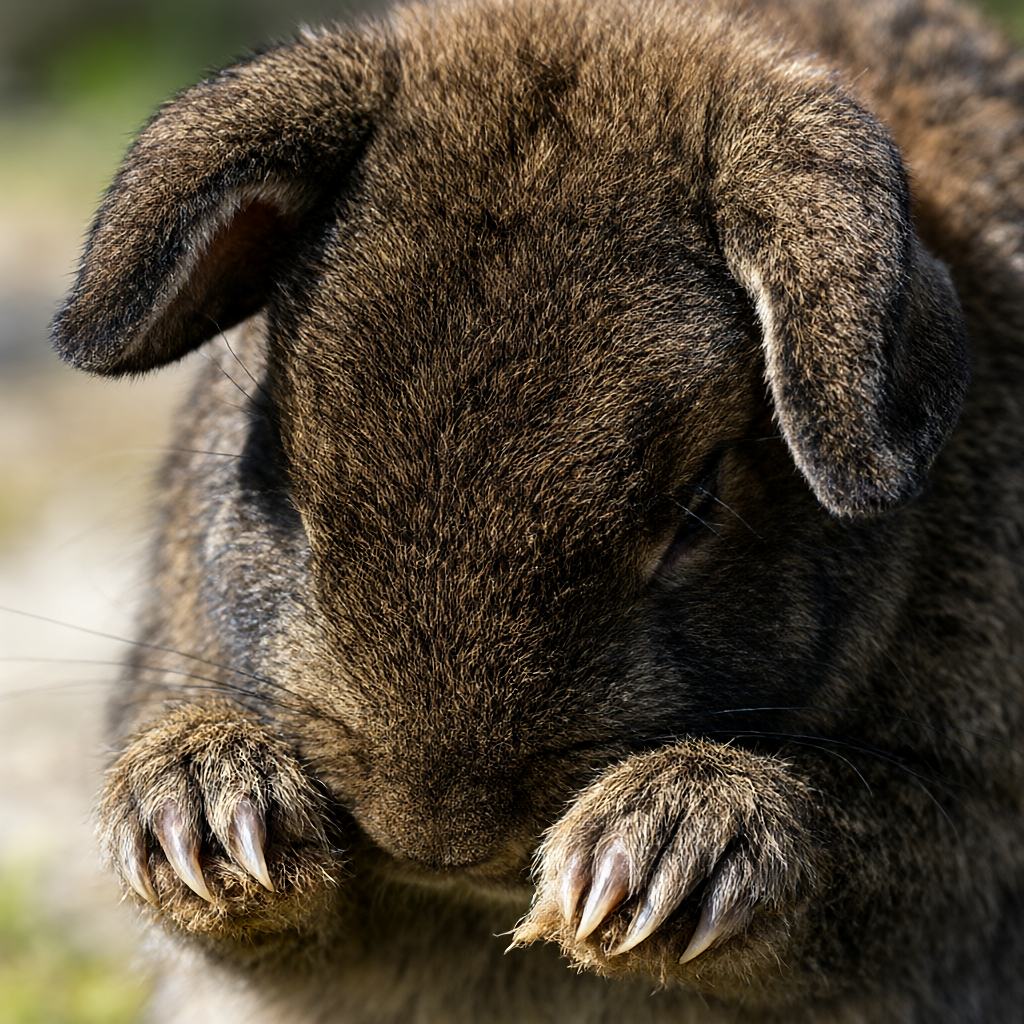
Weight stays near 2.5 kg. Fur stays dark brown. Ears look far shorter than a common rabbit’s. Long curved claws on the front feet never stop growing. Those claws dig through packed soil and tear open rotten wood.
The species belongs to an old line that reached these islands long before any mainland rabbit appeared, and it has changed very little since. Bodies keep to forest. Open ground offers nothing. People see one only after dark, when the forest floor goes quiet. Dogs find them faster than people do.
Family tree
Leporidae, the rabbits and hares
Amami rabbits sit in a genus of their own. That genus holds one species. Leporidae covers every rabbit and hare. This animal split from the rest very early. A European Rabbit reached other continents through people, while this one never left its islands. Both dig burrows and bear naked young. Island animals grow heavier and slower.
Teeth tell the same story. Molars stop growing at adulthood. Most rabbits keep growing teeth for life. This one does not. Fossils show a wide group of similar rabbits. Only this island form survived the changes. Japan made the animal a natural monument in 1921.
That ruling banned hunting on both islands. That law saved the species from the cooking pot, yet it did nothing about the forests. Geography now matters more than taxonomy. Two islands carry the whole world group. Few biologists argue about the name, and most work goes into counting animals instead.
One genus, one species
How to tell one
The body is stout and the legs are short, so the animal moves with a heavy hop. Fur looks dark brown on the back and paler under the chin. Ears measure about half the usual length. Small ears lose far less heat. Front claws grow long and curve down.
The animal swings them like a pick. Hind feet carry shorter claws and a thick pad. The tail stays short and barely shows at all. Females grow slightly larger than males. Litters hold two or three young.
Eyes sit wide on the head, which helps in near darkness. Whiskers reach far forward and touch the ground ahead of the nose, which guides the animal through litter. Nothing about the body suggests speed, yet the animal slips through bamboo without a sound. A frightened rabbit freezes rather than runs, and that habit hides it well in dim light.
1
2
3
Claws built for digging
Where it lives
Warm forest covers both islands. The rabbit keeps to darker patches. Bamboo grows thick here, and the stems give cover through the year. Ferns and moss cover the floor. Ground stays damp for weeks after rain. Rain falls often, and the air holds warmth even in the cold months.
Open farmland holds no animals at all, since the rabbit needs dense growth around it every day of the year. Forest edges lose them quickly once the canopy opens up. Each animal keeps a small home range. Resting spots stay the same for months. Burrows sit under roots and logs. One animal digs several.
Wet soil makes digging easy, yet heavy rain can flood a burrow in a single night. Roads cut through the remaining forest. Cars kill animals that cross after dark. Cats and dogs follow those roads in. Both hunt the rabbit. Thickets along streams link one patch to another, and animals move along those strips.
Subtropical forest on two islands
What it eats
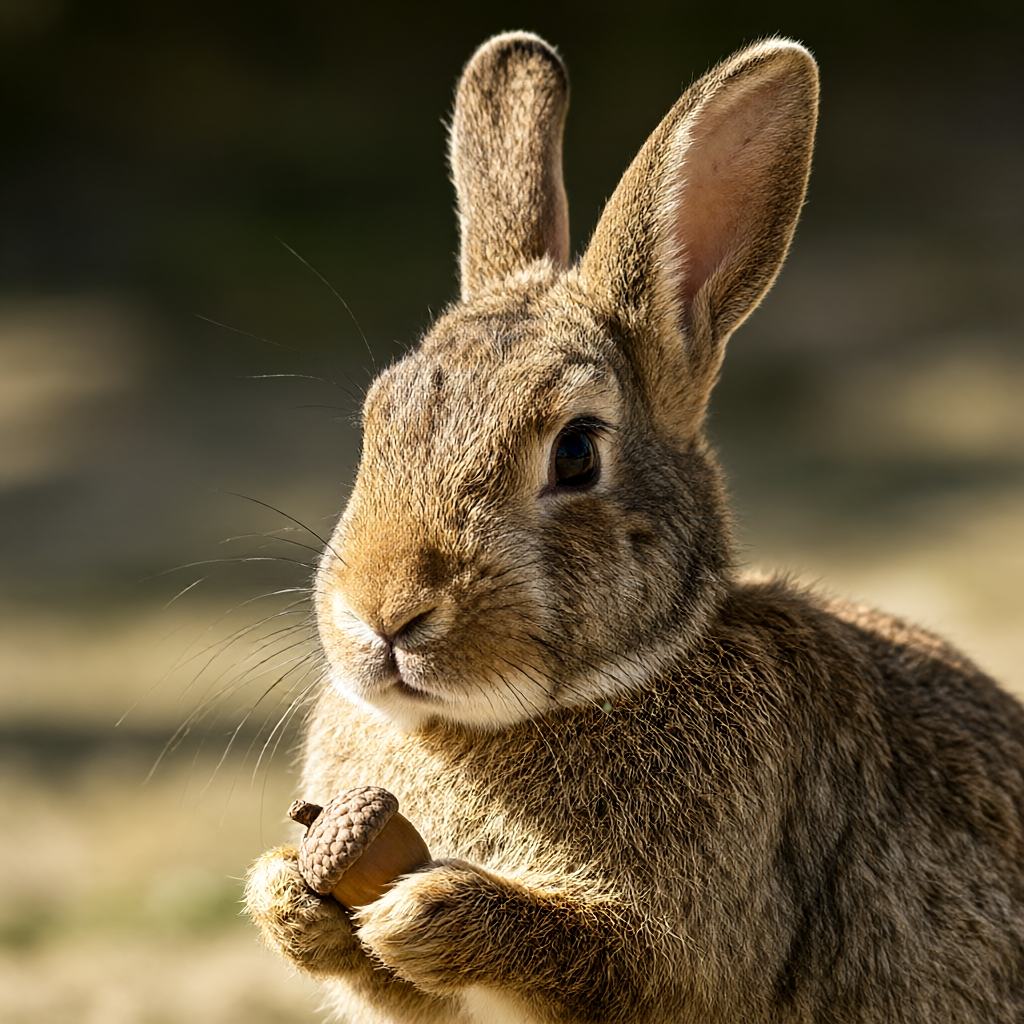
Grass, ferns and shrubs form most of the diet, although acorns and bark fill the gaps in autumn. The animal also takes acorns, and it strips bark from young stems. Cycad seedlings appear on the menu, and the rabbit bites them off at ground level. That habit harms the cycads, which grow slowly and rarely set seed.
Feeding goes on through the night in short stops, with long pauses between them. An animal may walk several hundred metres between mouthfuls. Teeth cut rather than grind, since the jaw works with a sideways motion. Water comes from dew and from wet plants, so drinking happens rarely and the animal never seeks a stream.
Poison laid for other animals kills rabbits too, and the risk grows near farmland. Food stays rich in summer, and the animal builds no stores for winter. Cold weather slows the forest, yet the rabbit keeps feeding through it. Fallen fruit draws animals to one tree, and several rabbits may feed there together without any fighting.
Ferns, acorns and cycad shoots
The breeding cycle
Breeding runs through spring and autumn, and a female may raise two litters in a year. Each litter holds one to three young. The mother lines a burrow with fur and dry leaves before the birth. Young arrive blind and naked, and they stay underground for weeks.
A female visits the burrow only to feed them, which keeps her scent away from predators. Weaning comes slowly, and the young start taking solid food at about a month old. Young animals leave once they can hop well, and they scatter into nearby thickets. Most young die in their first year, since cats, dogs and snakes all take them before they can breed.
Adults live alone for most of the year, and pairs meet only to breed. A female may produce young in her first year, while males take longer to grow. Nobody has measured how long a wild animal lives, although captive ones have reached nine years. Few animals breed twice in the same burrow, and the mother abandons it afterwards.
Endangered, and still losing ground
Conservation
The IUCN lists the species as Endangered, and the trend continues downward. Habitat loss drives most of that fall, since forest is cleared for roads and for timber. Alien hunters add to the pressure, and mongooses once emptied whole valleys. Wild cats and dogs now do the same work, and they reach places that mongooses never did.
Hunting has stopped, yet that gives the animal only one clear gain over the past century. Safety depends on fences and on night patrols along the main roads. Cameras now count animals in places where nobody could survey before, and the results surprise the wardens. Captive pairs have produced young, yet release remains difficult.
A single disease could sweep two small islands, since every animal shares the same gene pool. Forest strips between reserves matter most, because cut-off groups lose variety fast. Local schools now teach children to leave the animal alone, and that work pays off slowly. Long-term survival depends on the two islands staying free of new predators, since one arrival could end the species.
Side by side
How It Compares
| Trait | Amami Rabbit | European Rabbit |
|---|---|---|
| Length | 40 to 50 cm | 34 to 50 cm, with ears near 7 cm |
| Weight | near 2.5 kg | 1.1 to 2.5 kg |
| Home | subtropical forest on Amami and Tokunoshima | warrens in open ground across Europe |
| Diet | grass, acorns and cycad seedlings | grass and crops near the burrow |
| Habit | shelters in hollows and rock crevices | digs a burrow system |
| Rating | Endangered | Endangered |
Common misreadings
What People Get Wrong
- Most people assume every rabbit digs a burrow, yet this one shelters in hollows.
- Travel guides often call it a living fossil, though that label is mostly about Japan.
- Zoo signs still describe it as a rodent, although the long claws belong to a true rabbit.
Going further
Sources and Further Reading
Quick hits
Five things to remember
- Short ears and long claws set the animal apart from every other rabbit.
- Japan made it a natural monument in 1921.
- Cycad seedlings form part of the diet.
- A frightened rabbit freezes instead of running.
- Both islands together hold the whole world population.