 By Iris
Bradypus tridactylus | Pale-throated Three-toed Sloth
Species Profile · Bradypodidae
Pale-throated Three-toed Sloth
A grey hanger with algae in its hair, and three claws on every limb.
Least Concern
Length
Weight
Claws
Sleep
Range
Rating
Three claws and green fur
A life spent upside down
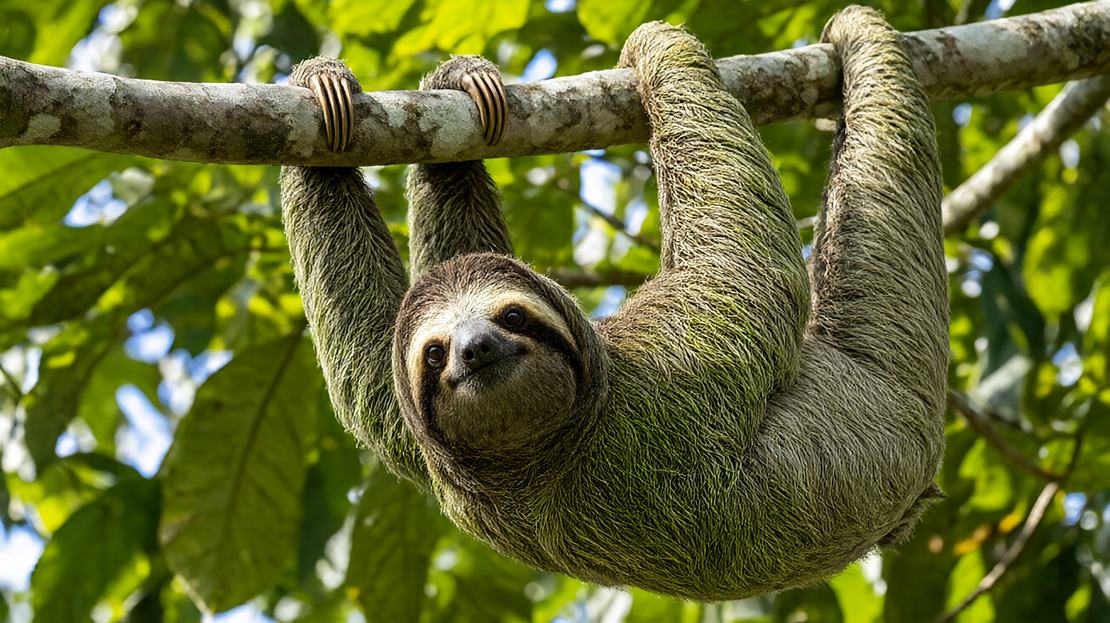
A shaggy grey animal hangs under a cecropia branch, hooked on by three curved claws. It has hung there for hours. Movement comes slowly, one limb at a time. Three-toed sloths live in the canopy of northern South America, from Venezuela across the Guianas into northern Brazil. Adults run 45 to 75 cm and weigh 3 to 5 kg.
Long coarse hair covers the body, and a pale throat sits below a dark stripe that runs through each eye. Green algae grows in grooves along the hairs, which gives the coat a mossy tint. That tint helps in a wet forest, since a still animal looks like a termite nest or a clump of leaves. Most of the day passes in sleep, though far less than people once believed. Wild animals sleep about ten hours.
Their fame for laziness comes from captive animals, which slept much longer. A slow life in the canopy turns out to be a good fit for a diet of leaves. Nothing about the animal is wasted.
Family tree
Bradypodidae, the three-toed sloths
Four species fill the genus Bradypus, and all of them live in the American tropics. This one keeps the name tridactylus, which refers to the three claws on each limb. Two-toed sloths sit in a separate family, and they differ in the neck and the diet. A brown-throated Sloth from Central America shows the same habit, although the two species never meet.
Sloths belong to an old South American stock that once included ground sloths the size of elephants. Those giants died out a few thousand years ago. Tree sloths survived, and they changed little in shape. The family split from the anteaters and armadillos long before the ice ages.
Genetic work places the four species on separate branches, and it dates their splits to millions of years. Sloths are close kin of anteaters, although the two look nothing alike. Their nearest living relatives feed on ants and termites rather than leaves.
Four sloths, one genus
How to tell one
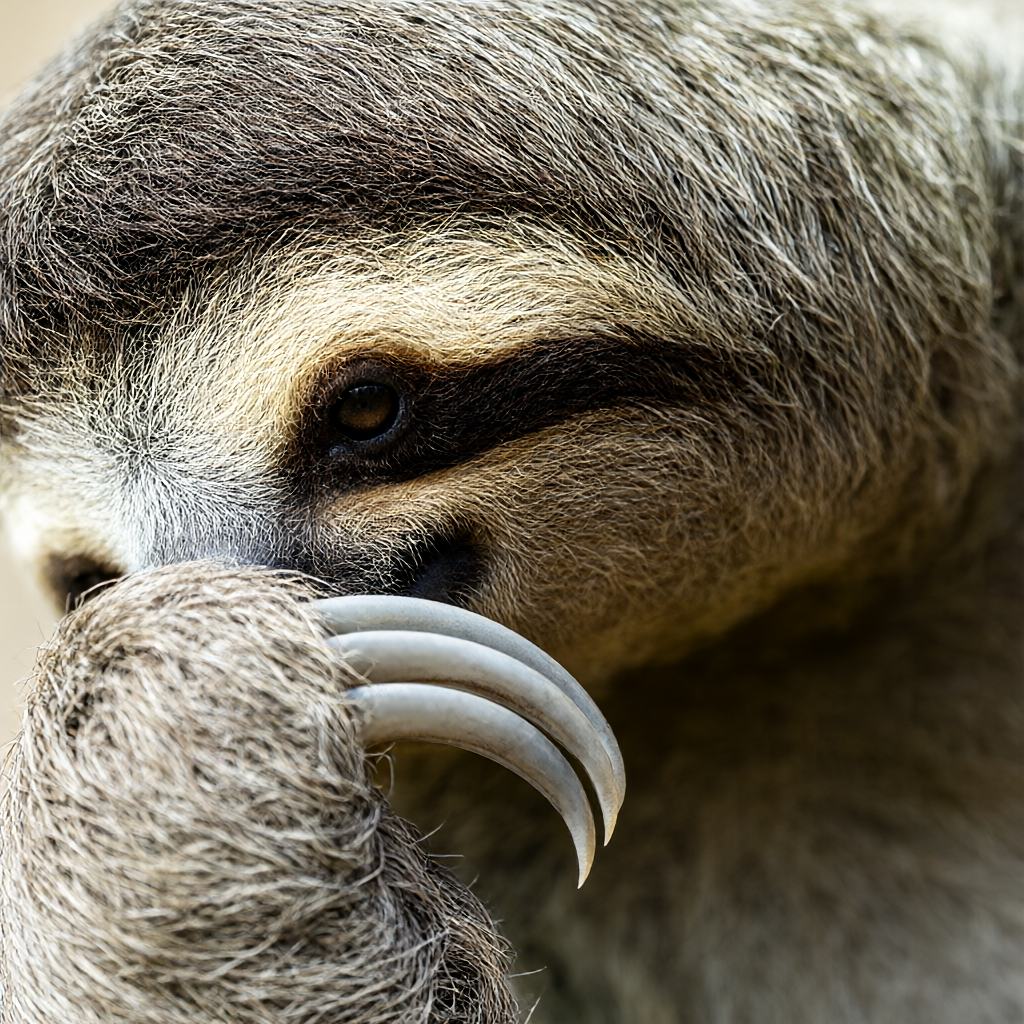
Three curved claws end each limb, and the front pair grows longer than the hind pair. Those claws hook over a branch, and the animal hangs with little effort. Long arms give a wide reach, so a sloth can move without shifting its grip. Hair grows from the belly toward the back, which lets rain run off.
Grooves along each hair hold water and algae. Moths and beetles live in the fur, and some of them never leave the host. The neck carries more vertebrae than most mammals have. Extra joints let the head turn far enough to watch the ground.
Body temperature drops at night, which saves energy. Muscle mass is small for the size of the animal. Limbs move slowly, yet the grip is strong enough to hold a sleeping animal through a storm. Swimming comes easily, and sloths cross rivers with steady strokes.
1
2
3
Claws and green hair
Where it lives
Lowland rainforest holds the species, from sea level up to about 1,000 m. Cecropia trees matter most, since the leaves are easy to reach and quick to digest. Other trees get used, although the animal returns to favoured crowns. Canopy height matters more than tree species, because cover comes from above.
Continuous forest keeps populations connected. Sloths also live in swamp forest, where the water table stays high. They enter secondary growth when tall trees remain. Open ground stops them.
Crossing it is slow and exposed. Each animal keeps a small home range, and it may stay in one tree for days. Forest edges hold fewer animals, because wind and light dry the leaves. Roads kill many animals, since the canopy gap forces them down.
Lowland rainforest canopy
What it eats
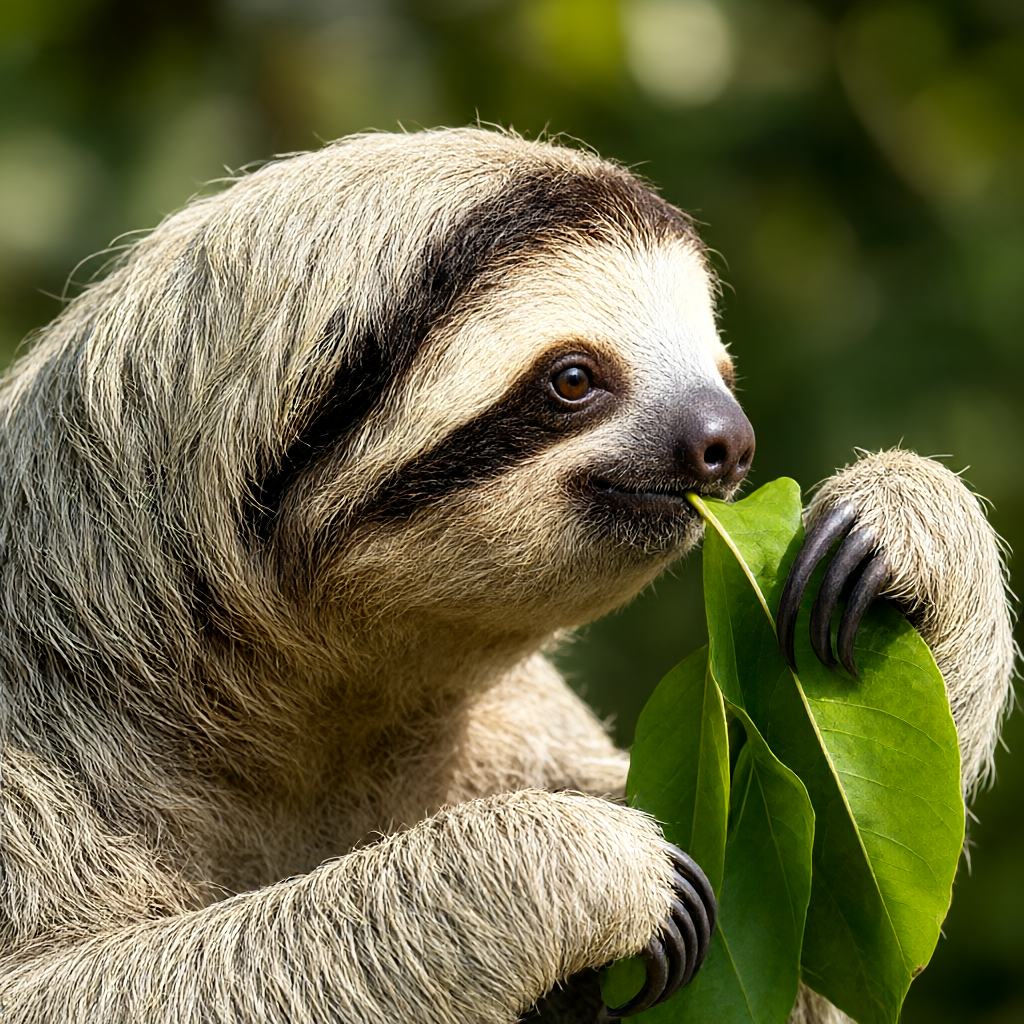
Leaves form almost the whole diet, and cecropia leaves rank first. Young shoots and buds also get eaten. The animal takes a leaf with its lips, then chews slowly. Digestion depends on gut microbes. The process takes days.
A leaf meal yields little energy, so the animal spends most of its time resting. Sloths sometimes eat soil from termite mounds, which may supply minerals. They also lick algae from their own fur. Water comes from dew and from juicy leaves. Feeding happens in short bouts through the day and night.
A sloth may eat only a few leaves an hour. Low food intake matches a slow body, and the two keep each other in balance. Missing a meal costs little, since the body runs on very little fuel.
Leaves, chewed slowly
The breeding cycle
Most activity happens at night, although sloths also move by day. An animal grooms often, and it uses its claws like a comb. Threat brings a slow turn toward the trunk, and the animal then freezes. Camouflage does most of the work.
Predators include harpy eagles, ocelots and jaguars. The riskiest habit is the weekly trip to the ground. A sloth digs a small hole at the base of a tree, then covers the waste. Nobody knows why the animal takes that risk, although several ideas exist.
Females give birth in the canopy after about six months. One young is usual, and it clings to the mother’s chest for weeks. The young starts tasting leaves at a few weeks old. Independence comes at about six months, when the mother moves to another patch.
Least Concern, and road killed
Conservation
The IUCN lists this species as Least Concern. Its range is large, and much of it lies in forest that is hard to reach. Clearance still removes habitat across the Guianas and northern Brazil. Roads and power lines kill animals, since sloths grip cables and hang from wires.
Hunting takes a few animals for meat, and the pet trade takes more. A captured sloth rarely survives long, because the diet is hard to copy and the animal stresses easily in a cage. Parks cover part of the range, although patrols stay thin. Corridors over roads have helped in a few places.
Slow breeding limits recovery, since a female raises one young a year at best. Warm forest with tall trees remains the main need. Strips of trees along rivers keep populations linked.
Side by side
How It Compares
| Trait | Pale-throated Three-toed Sloth | Brown-throated Sloth |
|---|---|---|
| Length | 45 to 75 cm | 45 to 70 cm |
| Weight | 3 to 5 kg | about 4 kg |
| Throat | pale, with a dark stripe through each eye | brown, with a dark stripe through each eye |
| Range | Venezuela across the Guianas | Central America into northern South America |
| Home | lowland rainforest and swamp forest | lowland forest and open woodland |
| Rating | Least Concern | Least Concern |
Common misreadings
What People Get Wrong
- Most people believe the animal sleeps all day, yet wild ones sleep about ten hours.
- A popular claim says the fur stays clean, although algae grows in grooves along each hair.
- Some guides claim the sloth cannot swim, yet it crosses rivers with steady strokes.
Going further
Sources and Further Reading
Quick hits
Five things to remember
- Wild sloths sleep about ten hours.
- Green algae grows in the fur.
- The neck carries extra vertebrae.
- Moths live in the coat.
- One young is born after about six months.