 By Iris
Dasyurus maculatus | Tiger Quoll
Species Profile · Dasyuridae
Tiger Quoll
The largest marsupial hunter left on mainland Australia.
Near Threatened
Body
Weight
Young
Weaning
Range
Rating
Seven kilos of hunter
Spots in the night forest
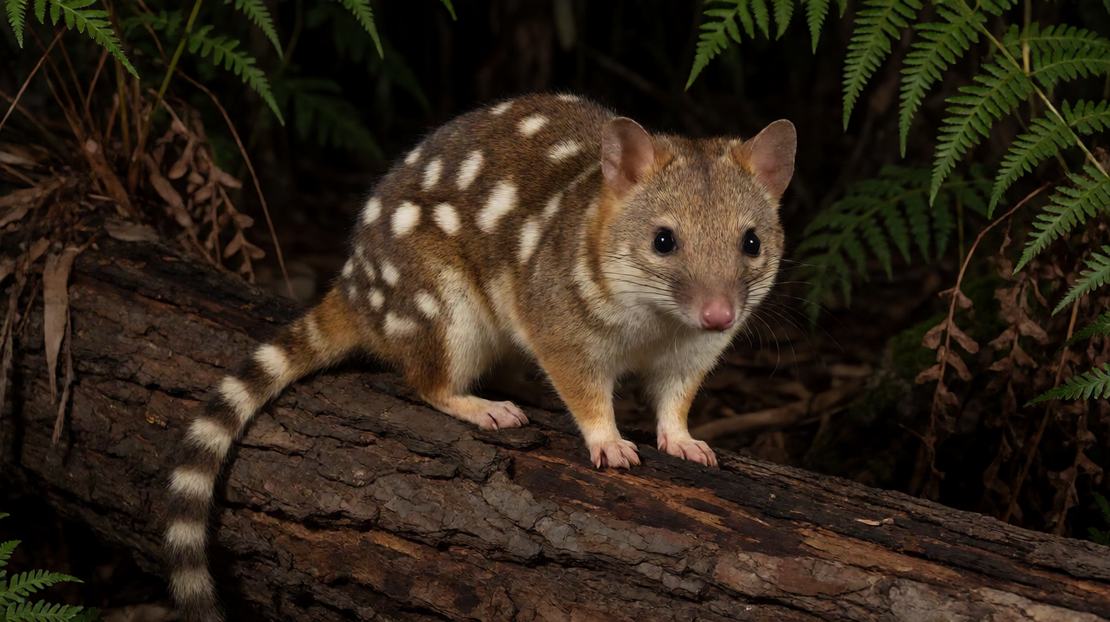
White spots over a red brown coat mark this night hunter. Body length runs 38 to 76 cm, and the tail adds another 40 cm. Weight reaches 7 kg in a large male. Eastern Australia holds the species, from Queensland to Tasmania.
Wet forest and tall woodland suit the animal, since it needs hollow logs and dense cover. Mammals form most of the diet, although the hunter also takes birds, reptiles and carrion. Each quoll patrols a home range at night, and the animal may climb a tree on the way round. Females carry up to six young in a shallow pouch.
Few marsupial hunters grow so large, yet the species is losing ground across its range. Foxes, cats and cars now press on every population, and the trend keeps falling.
Family tree
Dasyuridae, the quolls and devils
Dasyurus maculatus sits in Dasyuridae, the family of quolls and devils. Kerr named the species in 1792. Six quolls are recognised today, and this one grows the largest. The Tasmanian Devil shares the island state, while this animal also holds the mainland forests.
Both hunt at night, and both den in hollow logs. Their coats differ, though, because one is black with a white collar and the other red brown with spots. Genetic work splits the species into two forms, one northern and one southern. Two subspecies are named today.
Older settlers called it the tiger quoll, and the name comes from the barred back. A single species now survives in patches, although the patches were once joined by forest.
One of six quolls
How to tell one
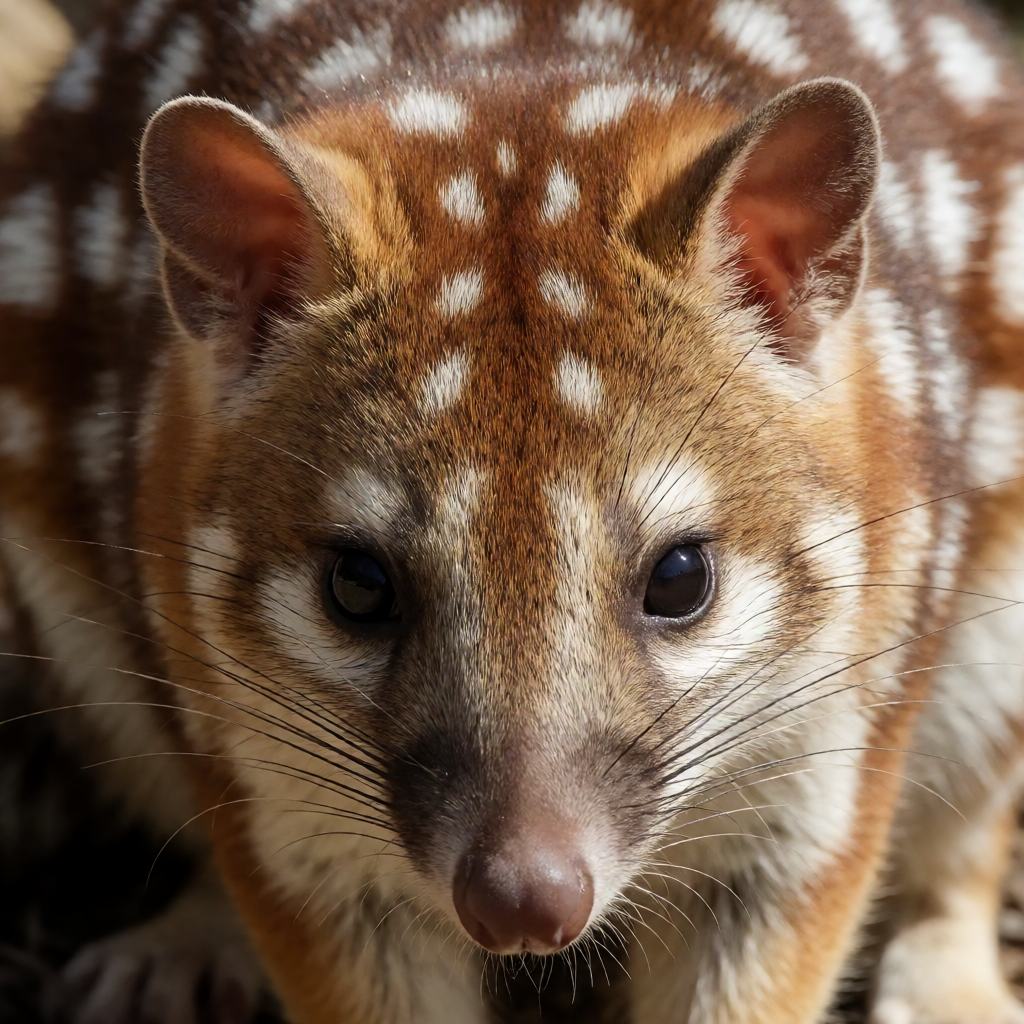
Body length reaches 76 cm in a large male. Weight runs 1.5 to 7 kg, with males far heavier than females. Fur looks red brown above and pale below, and white spots cover the back and the tail. Spots cover the tail as well as the back, which no other quoll shows.
The snout stays short, and the jaw carries sharp teeth. Paws grip bark, and the claws stay sharp through a life of climbing. Hind feet turn partly inward, which helps the animal grip a branch. Climbing comes easily, and the animal can descend a trunk head first.
Females carry a shallow pouch with six nipples. A male may range several kilometres in a night, and he fights rivals in noisy chases that end in bites.
1
2
3
Gripping paws, sharp teeth
Where it lives
Fire removes hollows. Regrowth takes a century to replace them. Rain forest edges and tall woodland also carry animals, although the densest forest suits them best. Roads cut through the range.
Each crossing costs lives. Hollow logs give dens, since the animal needs a dry chamber to rest in. Rock crevices serve the same purpose on steep ground. Cleared farmland holds few animals, because the species avoids open ground.
Fire removes hollows, and regrowth takes a century to replace them. Roads cut through the range, and each crossing costs lives. Survival needs linked forest, because a gap of open pasture blocks a young animal on the move.
Wet forest with hollow logs
What it eats
Mammals form the base of the diet. Rabbits, possums and small wallabies fall to a hungry quoll. Birds, lizards and insects fill the rest. Carrion is taken when the animal finds it.
Hunting happens on the ground and in the trees. Stalking comes first, and then the hunter rushes the prey in a short burst. Teeth and claws finish the work, although the animal eats fast and leaves little behind on the bare ground. A large kill may feed the hunter for several nights, and the carcass then draws others.
Dens collect bones and fur, and the litter marks a regular resting place. Feeding happens alone, since adults meet only to breed.
Meat taken day and night
The breeding cycle
Mating happens in winter. Males and females stay together for a few days. Up to six young are born after three weeks. The young stay in the pouch for about two months.
Females with young carry a heavy load, and they hunt less often. Weaning comes near seven months. Young animals then scatter, and many die on the roads. Females breed once a year at most, and some skip a year.
Populations therefore grow slowly, and losses take years to replace. Few young reach adulthood, so each breeding female matters to a local group.
Near Threatened, and losing forest
Conservation
IUCN lists the species as Near Threatened. Numbers fall across the mainland, and the northern form suffers most. Clearing removes the forest that the animal needs. Foxes and cats kill young quolls and compete for food.
Baiting for foxes can poison quolls, since the animal takes carrion. Cars kill animals on forest roads at night. Guarded areas cover part of the range, although the best forest sits on private land. Landholders keep hollow logs and fence stock from creek lines.
Night surveys use cameras and spotlights, and the figures guide the work. Keeping forest corridors matters more than keeping one patch, because a young quoll must cross to find a mate.
Side by side
How It Compares
| Trait | Tiger Quoll | Tasmanian Devil |
|---|---|---|
| Body | 38 to 76 cm, with a spotted tail | 57 to 65 cm, with a white collar |
| Weight | up to 7 kg | up to 12 kg |
| Home | wet forest in eastern Australia and Tasmania | dry forest and coast in Tasmania |
| Coat | red brown with white spots | black with a white chest band |
| Food | mammals, birds and reptiles at night | carrion, plus small mammals and birds |
| Young | up to six in the pouch | two to four in the pouch |
Common misreadings
What People Get Wrong
- Many people think the quoll lives only in Tasmania, yet the mainland holds a form.
- Some guides call the animal a cat, although it is a marsupial with a pouch.
- A common claim says the tail is plain, yet white spots cover the tail.
Going further
Sources and Further Reading
Quick hits
Five things to remember
- The tail carries white spots too.
- A male may reach 7 kg.
- Six young fit in the pouch.
- Quolls climb trees with ease.
- Old settlers used the name tiger quoll.