 By Iris
Cephalorhynchus hectori | Hector’s Dolphin
Species Profile · Delphinidae
Hector’s Dolphin
The smallest sea dolphin on earth, and it never leaves New Zealand.
Endangered
Length
Weight
Fin
Range
Maui form
Rating
Fifty kilos, one coastline
A dolphin the size of a person
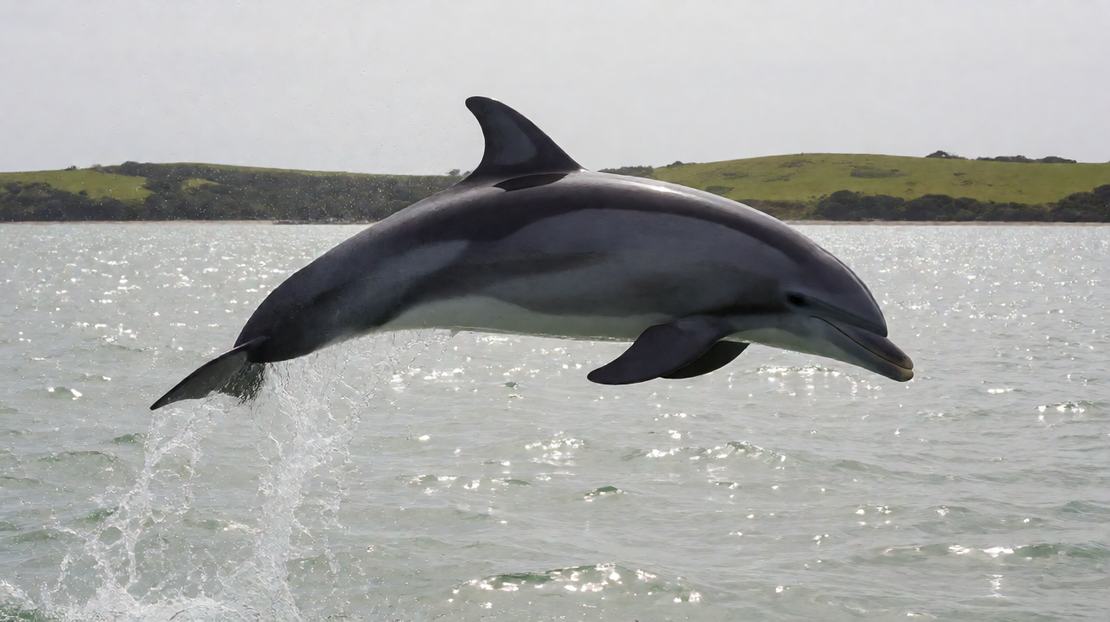
A rounded black fin rises above the water like a small sail. Hector’s dolphin is the smallest sea dolphin in the world. Adults run 1.2 to 1.5 m long. Weight stays near 50 kg, and adults of both sexes look alike.
This species lives only in New Zealand. Sandy bays and harbour mouths hold most of the animals. Their backs carry a black and white pattern that looks like a dolphin drawn on a dolphin. Such markings make the animal easy to name from a boat.
Few dolphins stay so close to shore. Seeing a pod means standing on a beach, since the animals feed within sight of land.
Family tree
Delphinidae, the ocean dolphins
Cephalorhynchus hectori sits in Delphinidae, the family of ocean dolphins. Van Beneden named the species in 1881 from a New Zealand skull. Four small dolphins share the genus, and each stays in cold coastal water. The Common Dolphin crosses whole oceans, while this animal never leaves New Zealand.
Both hunt small fish in groups, and both use clicks to find prey. Their fins differ, though, since one is tall and pointed and the other is round. Two subspecies are named, and the second lives only off the North Island. Maui’s dolphin is the name of that second form.
Fewer than 60 adults remain in it. Genetic work shows the two forms split long ago, and neither mixes with the other.
Four small dolphins in one genus
How to tell one
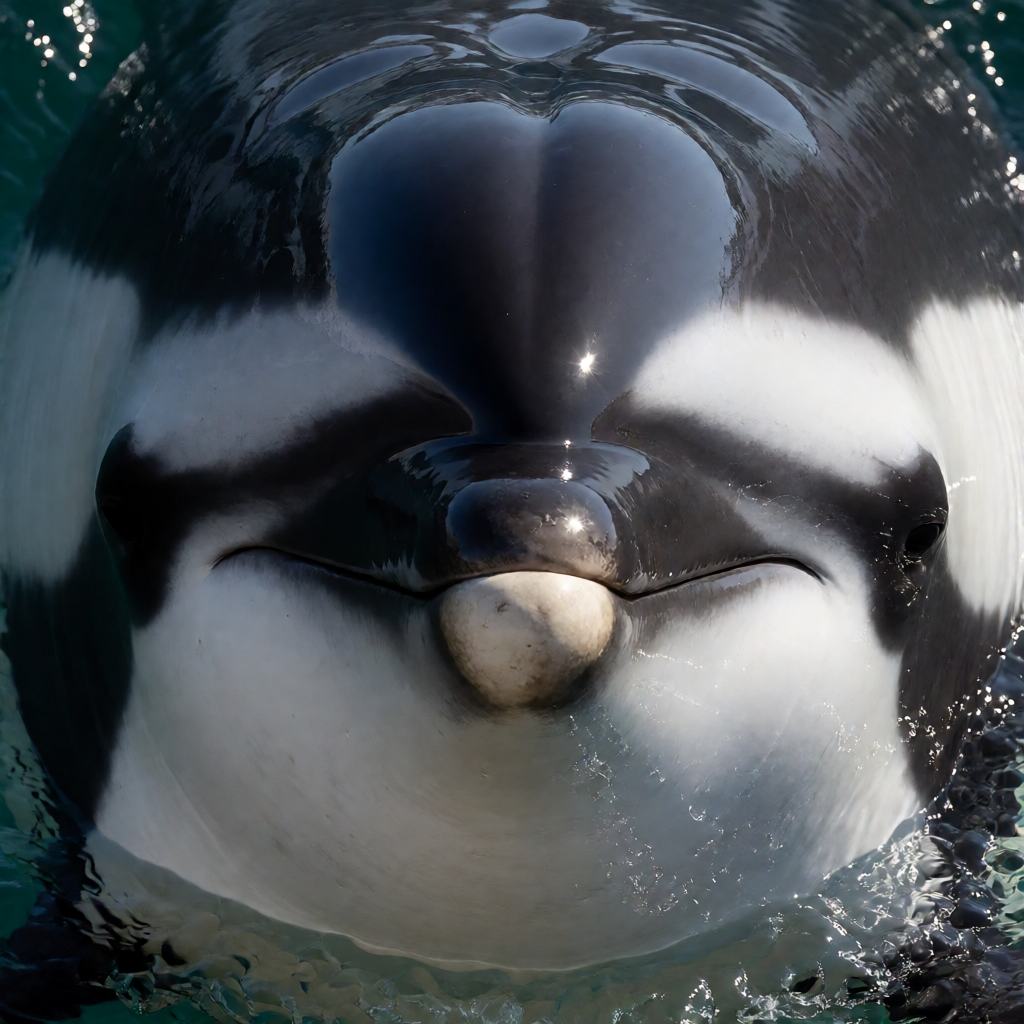
Body length runs 1.2 to 1.5 m. Weight sits between 40 and 60 kg. A rounded black fin sits on a wide back. Grey covers the sides, and white runs along the belly.
Black markings trace a dolphin shape across each flank. Snouts are blunt, and no beak shows. Teeth number about 30 in each jaw, and they stay small and pointed. Flippers are short and rounded, which helps in tight turns near the bottom.
Females grow slightly longer than males. Calves stay beside the mother for two years, and the pair moves as one animal.
1
2
3
Small body, cold water
Where it lives
Shallow coastal water holds the species. Depth rarely passes 100 m, though a few animals work deeper water. Harbours, river mouths and sandy bays all suit it, since each one holds small fish. Most animals live off the South Island.
Pods stay small, and four animals make a large group, though six have been counted. The dolphins feed within a few kilometres of the beach. Living so close puts them in the same water as set nets. Estuaries matter in summer, since small fish gather there and the calves learn to hunt in shallow water.
Cold water carries the fish that the dolphins need. Dolphins that live this close to land meet every boat, every net and every drain, and none of those meetings favours them.
Sandy bays and harbour mouths
What it eats
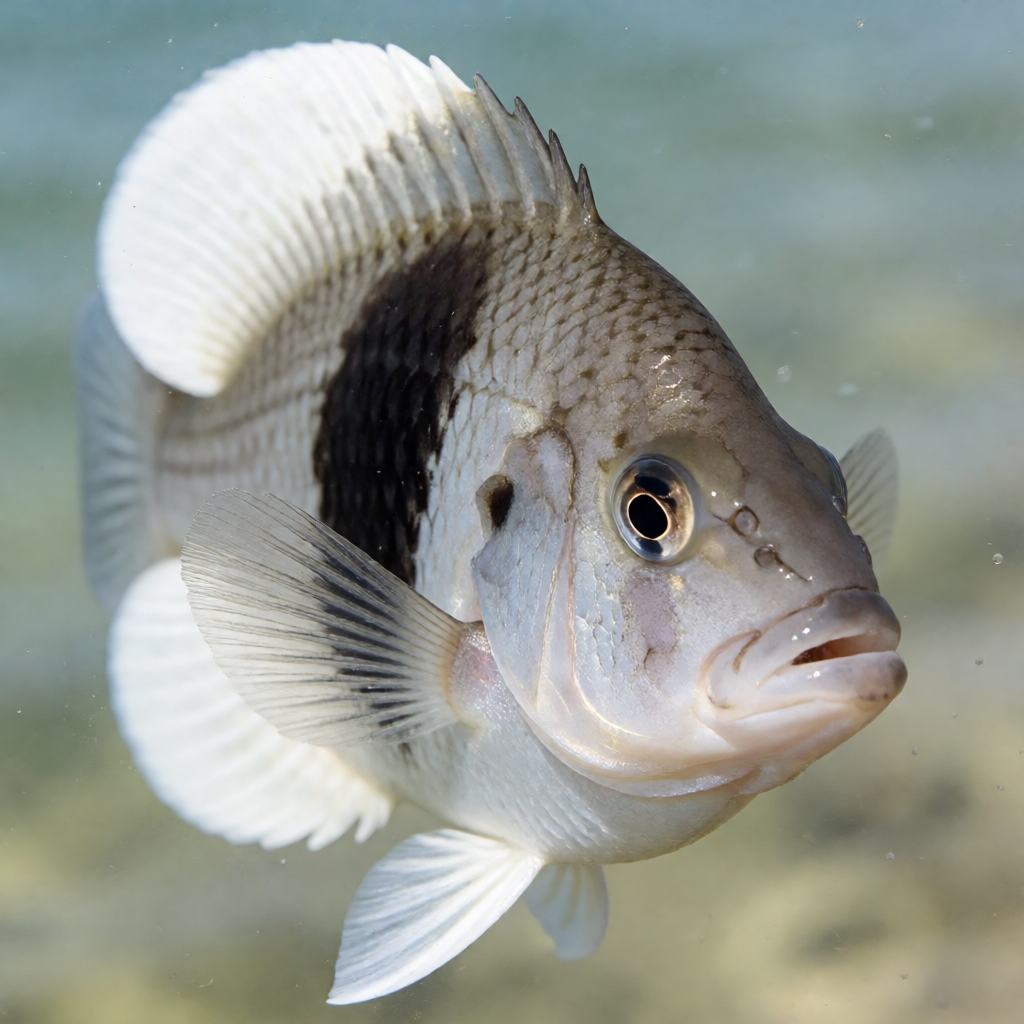
Small fish form most of the diet. Yellow eyed mullet and sprats are the usual catch. Squid and small crabs fill out the list, although fish still dominate. Feeding happens near the bottom as well as at the surface.
Most dives last two to four minutes, and the animal rises without a splash. Clicks travel ahead of the animal and return as an echo, which the jaw picks up. Echoes tell the dolphin where a fish sits in murky water. Groups hunt together, and they drive fish toward each other.
Feeding slows at night in some parts of the range, though nobody knows why. Dolphins of this size must eat often, since a small body loses heat fast in cold water.
Fish and squid near shore
The breeding cycle
Females reach breeding age at seven to nine years. Males take longer, and some wait until they are twelve. Gestation runs about eleven months. One calf is born in spring or summer.
Calves nurse for a year or more. Another calf comes every two to four years. Such a rate is slow for a small mammal. Few females raise more than four calves in a life, and every calf takes years to wean and to learn.
Pods help guard the young, and adults close ranks when a boat nears. Populations that lose adults this slowly cannot rebuild quickly, because every female lost removes one calf every three years.
Endangered, and net bound
Conservation
IUCN lists the species as Endangered. Set nets drown the largest number of animals each year. Trawls take a share as well, although the toll is smaller. A parasite from cat litter reaches the sea in runoff.
Disease has hit Maui’s dolphin hardest. New Zealand banned most set nets inside the range in 2008, after a long campaign by local groups and years of talks. Sanctuary zones now cover part of the coast, and boats must slow inside them. Boats disturb feeding groups, and calves lose time at the surface, which slows their growth.
The Maui’s form sits near 55 adults, and every death counts. Protection works best where nets come out of the water completely, since a partial ban leaves gaps that the animals still swim through.
Side by side
How It Compares
| Trait | Hector’s Dolphin | Common Dolphin |
|---|---|---|
| Length | 1.2 to 1.5 m, and the female grows slightly longer | 1.7 to 2.4 m, with a longer beak |
| Weight | about 50 kg in the adult | 70 to 135 kg, and heavier in cold water |
| Home | coastal water off the South Island of New Zealand | warm and temperate seas in three oceans |
| Fin | rounded and black, with no beak at all | tall and curved, with a pale flank patch |
| Food | small fish and squid taken near the shore | sardine, anchovy and squid in open water |
| Group | pods of two to twelve along one coast | herds of hundreds, and sometimes thousands |
Common misreadings
What People Get Wrong
- Many people believe the animal ranges across the Pacific, yet it never leaves New Zealand waters.
- Some guides call it a porpoise, although the teeth and the fin mark a dolphin.
- A common claim puts the population near a million, yet the count stays under twenty thousand.
Going further
Sources and Further Reading
Quick hits
Five things to remember
- Body length stays under 1.5 m.
- The fin looks like a small sail.
- Teeth number about 30 per jaw.
- Calves stay two years.
- It lives only in New Zealand.