 By st20113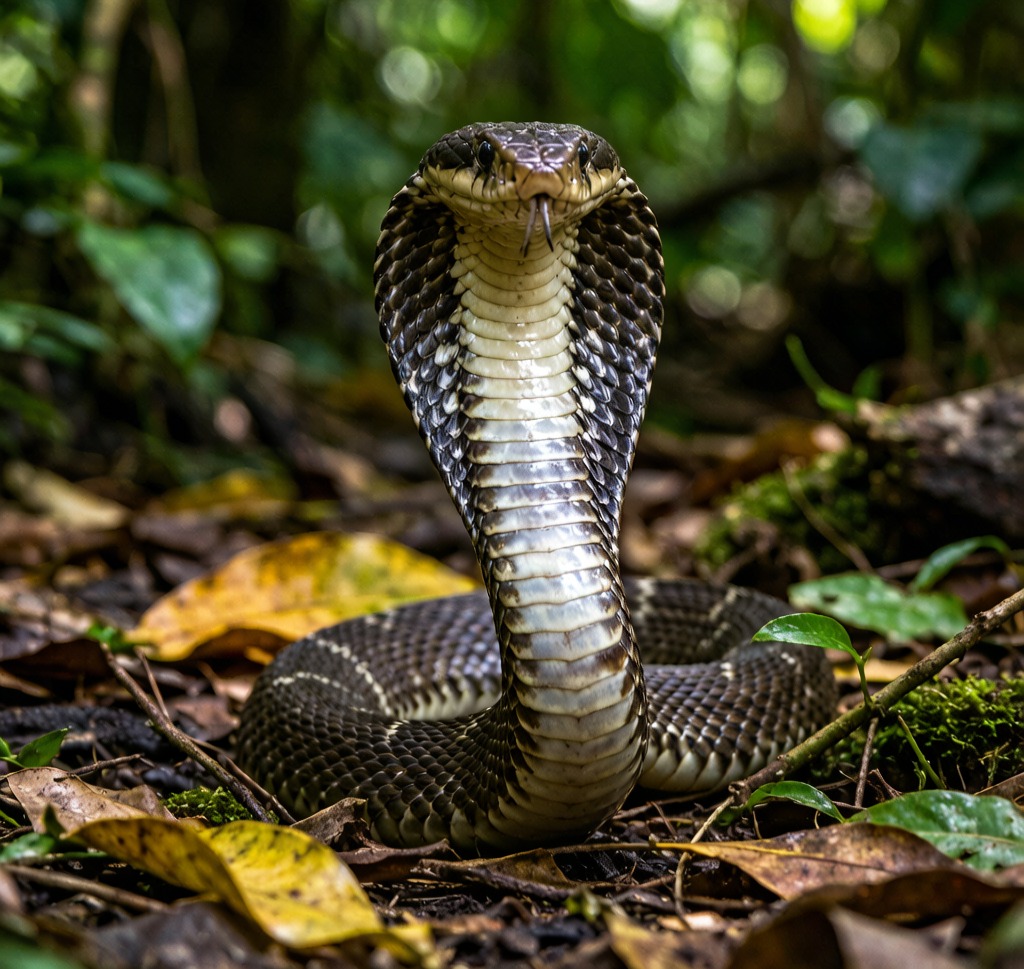
Introduction
The king cobra (Ophiophagus hannah) is the world’s longest venomous snake, capable of reaching lengths of 3 to 5.5 meters (10 to 18 feet) and capable of lifting the front third of its body off the ground to look a human in the eye. Native to the forests and agricultural areas of South and Southeast Asia, the king cobra is not only a formidable predator of other snakes — its name literally means “snake-eater” — but also a revered and culturally significant animal in many Asian societies.
Taxonomy and Classification
The king cobra is the sole member of the genus Ophiophagus, placing it in the family Elapidae alongside cobras, mambas, kraits, and sea snakes. Its closest relatives are the other “true cobras” of the genus Naja. The king cobra diverged from the Naja lineage approximately 25 to 30 million years ago. The genus name Ophiophagus is Greek for “snake-eater,” accurately reflecting its dietary specialization on other snakes.
Physical Characteristics
King cobras are impressive snakes. Adults typically measure 3 to 4 meters (10 to 13 feet), with record specimens exceeding 5.5 meters. They weigh 6 to 9 kg on average. Their coloration is olive-green, black, or dark brown, with pale yellow or white cross-bands. When threatened, the king cobra can raise the front third of its body off the ground and expand its hood.
Distribution and Habitat
King cobras are found from the Indian subcontinent through southern China and Southeast Asia to Indonesia and the Philippines. They inhabit a range of environments including dense highland forests, bamboo thickets, mangrove swamps, and agricultural areas. They are strongly associated with water and are excellent swimmers.
Diet and Hunting Behavior
As obligate ophiophages (snake-eaters), king cobras feed almost exclusively on other snakes — including rat snakes, pythons, kraits, and even other cobras — as well as occasionally other vertebrates such as lizards and small mammals.
Venom and Medical Significance
King cobra venom is primarily neurotoxic, targeting the nervous system and causing respiratory failure. A single bite can deliver 400 to 600 mg of venom — among the largest venom yields of any snake. With proper medical treatment including antivenom, fatality rates are lower than for some smaller cobra species.
Conservation Status
The king cobra is listed as Vulnerable by the IUCN. Major threats include habitat destruction and fragmentation, harvesting for traditional medicine and the pet trade, and persecution by humans.
[…] now split several species, keeping N. naja s. s. to the subcontinent. Relatives include the king cobra and other venomous snakes such as the western diamondback rattlesnake once treated as close in old […]
but exceptional specimens exceed 4 meters, making it the second-longest venomous snake after the king cobra. It is slender and fast, can raise a third of its body off the ground when striking, and has bursts