 By st20113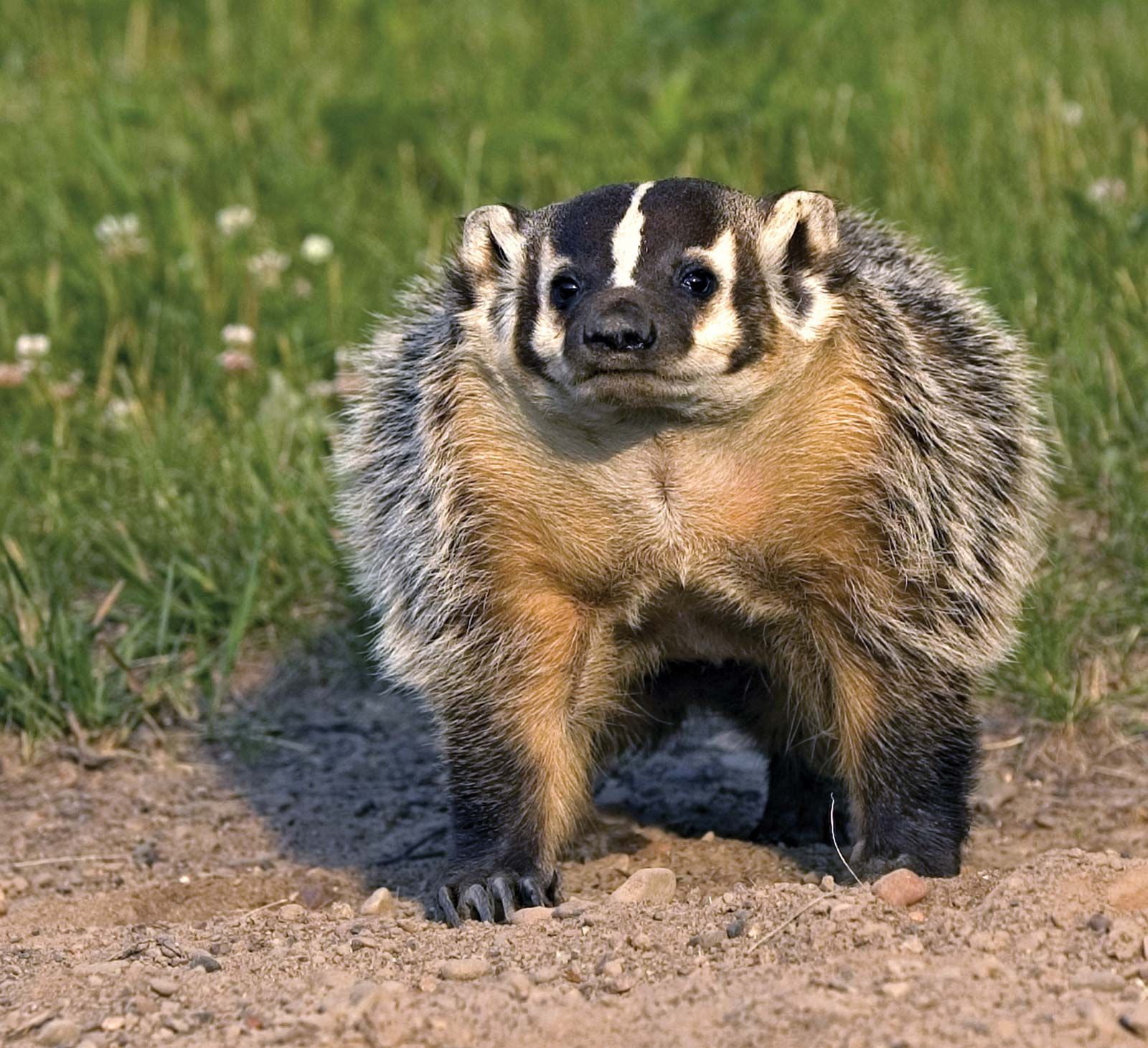
Introduction
Badgers are short-legged, heavy-set omnivores belonging to the family Mustelidae, which also includes weasels, otters, and wolverines. The most widely recognized species are the European badger (Meles meles) and the American badger (Taxidea taxus). Badgers are found across Europe, North America, and parts of Asia, inhabiting grasslands, woodlands, and prairie regions. Their most distinctive features are the striking black-and-white facial stripes and their remarkably powerful digging capabilities.
Taxonomy and Classification
Badgers belong to the family Mustelidae and are classified within several genera. The European badger belongs to the genus Meles, while the American badger belongs to the genus Taxidea. Some taxonomies recognize up to 16 badger species across the family. Despite their similar appearance, badger species on different continents are not closely related — their shared features result from convergent evolution.
Physical Characteristics
Badgers are compact, low-slung mammals with distinctive wedge-shaped bodies built for digging. European badgers weigh between 7 and 18 kg (15 to 40 lbs). Their most recognizable feature is the bold black-and-white striped face. Their claws are long, sharp, and recurved — perfectly adapted for excavating burrows called setts. Badgers have a thick, loose skin that allows them to twist and turn within burrows when confronted by predators.
Distribution and Habitat
European badgers are widely distributed across most of Europe, from the British Isles to western Russia. American badgers are found throughout western and central North America. Badgers prefer open grassland, meadows, and woodland edges where soil is suitable for burrowing.
Social Structure
Social structure varies significantly between species. European badgers live in highly social family groups called clans, typically comprising 5 to 12 individuals that share complex underground burrow systems. These setts can be centuries old and contain multiple entrances, tunnels, and chambers. American badgers are primarily solitary.
Diet and Foraging
Badgers are opportunistic omnivores with a diet dominated by earthworms, insects, larvae, small mammals, roots, tubers, and fruits. American badgers are more carnivorous, frequently hunting ground squirrels, prairie dogs, and other burrowing rodents.
Conservation Status
Most badger species are listed as Least Concern globally. The European badger is one of the most widespread mammals in Europe. American badger populations have declined in some regions due to habitat loss and agricultural practices.
[…] recognized subspecies across North America. Close relatives include the spotted skunks and the badger, another digging carnivoran. Although once grouped with weasels and the wolverine, modern […]
[…] remain in the family group to assist. Dispersal occurs in late summer or autumn of the first year. Badger and red fox are among the most significant predators, and the species relies on its complex […]