 By st20113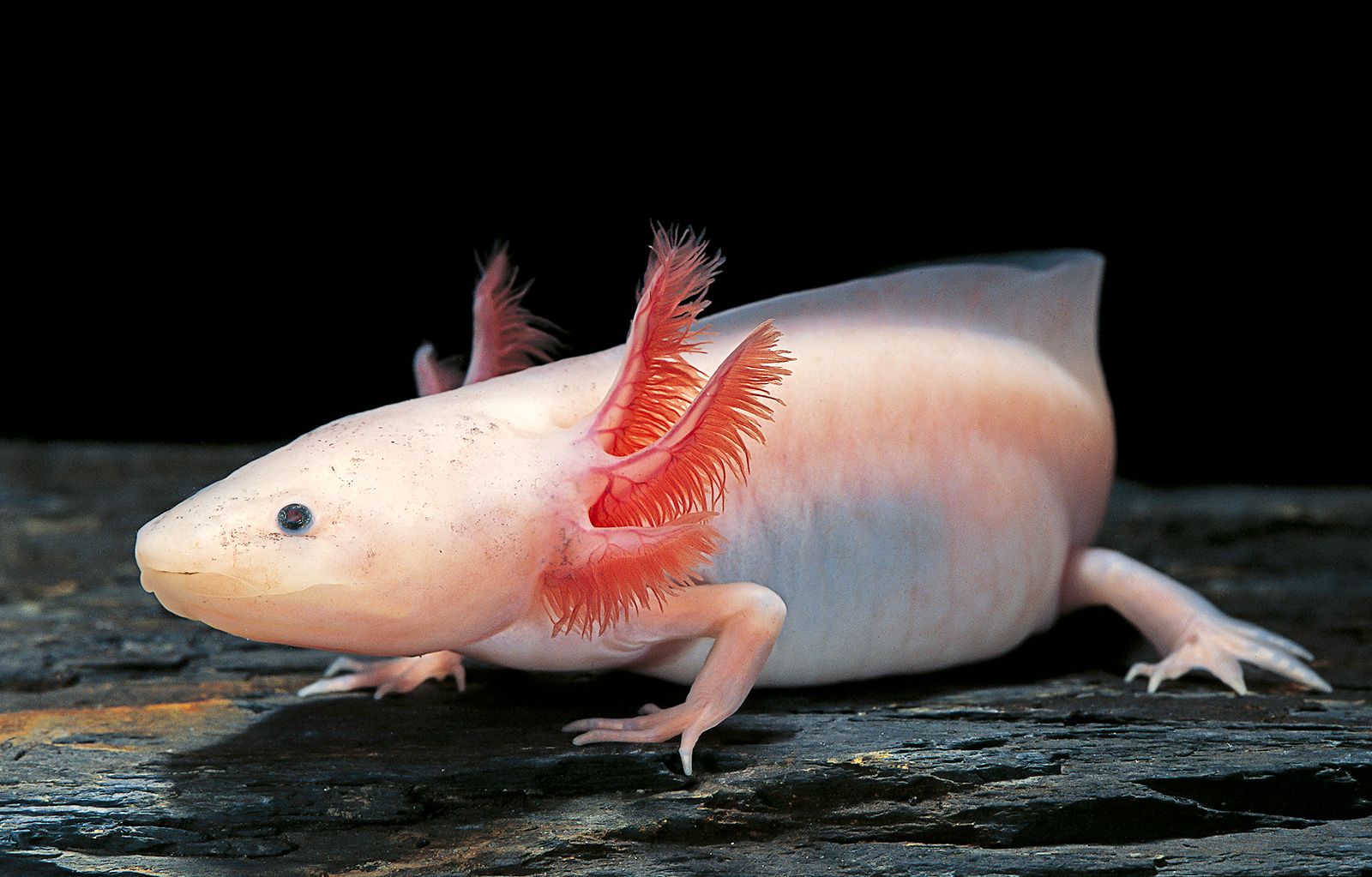
The Axolotl (Ambystoma mexicanum), the Mexican Walking Fish, is a neotenic salamander native to Lake Xochimilco in Mexico City. Despite being called a “fish,” it is an amphibian that retains its larval features throughout its entire life—a phenomenon known as neoteny. The axolotl has become one of the most studied organisms in biology due to its extraordinary regenerative abilities.
Physical Characteristics: The Axolotl is paedomorphic—retaining larval characteristics (external gills, dorsal fin, lidless eyes) into adulthood. Adults reach 15–45 cm in length. Wild-type specimens are dark (brownish-green), while captive-bred individuals are commonly leucistic (pale pink with black eyes). The three pairs of feathery external gills are highly vascularized for gas exchange.
Neoteny: Axolotls do not produce sufficient thyroid-stimulating hormone to trigger metamorphosis. They remain aquatic and retain juvenile features throughout life. Rarely, they can be induced to metamorphose into a terrestrial form through thyroid hormone injection.
Habitat: Wild habitat is Lake Xochimilco in southern Mexico City. Wild populations have dramatically declined due to urban expansion, water pollution, and the introduction of invasive tilapia and carp.
Regeneration: The axolotl can regenerate entire lost limbs, portions of the heart, liver, lungs, brain, spinal cord, and other organs with minimal scarring. Its genome, sequenced in 2018, is approximately 10 times larger than the human genome—the largest genome yet sequenced.
Conservation Status: Listed as Critically Endangered by the IUCN, with wild populations estimated at fewer than 1,000 individuals.