 By st20113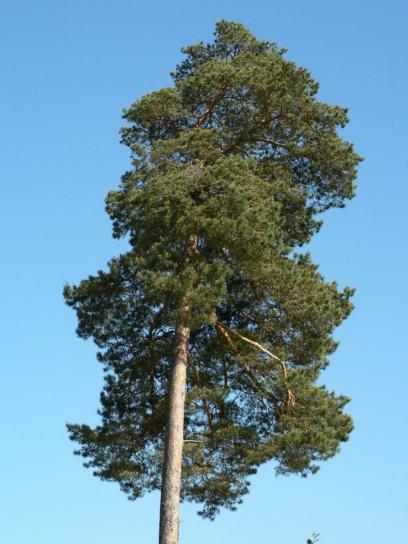
Pine trees (genus Pinus) represent the largest and most ecologically important genus within the conifer family (Pinaceae), comprising approximately 120 species distributed throughout the Northern Hemisphere. These evergreen conifers are foundational species in numerous ecosystems, from boreal forests to mountain slopes, and have been economically significant to human societies for millennia.
Physical Characteristics
Pine trees are woody plants ranging from small shrubs to towering forest giants. The tallest species, the sugar pine (Pinus lambertiana) of western North America, can reach heights of 70 to 80 meters (230 to 260 feet). Most pine species have a straight, cylindrical trunk covered in thick, furrowed bark that is often reddish-brown and fire-resistant.
The needle-like leaves of pines are grouped into bundles called fascicles, with the number of needles per bundle (typically 1 to 5) being a key identifying feature. Pine needles can be long and slender, adapted for water conservation in cold or arid environments. The trees are evergreen, retaining their needles throughout the year, with individual needles persisting for 2 to 17 years before shedding.
Pine trees produce woody seed cones, which can be small and numerous or large and robust. Male cones produce pollen, while female cones develop seeds after fertilization-a process that can take 1 to 3 years depending on the species.
Ecology
Pine forests are among the most extensive vegetation types on Earth. Boreal pine forests (taiga) cover vast stretches of Canada, Scandinavia, and Russia, while montane pine forests occur on mountain ranges worldwide. Many pine species are fire-adapted, with thick bark, self-pruning branches, and serotinous cones that open to release seeds after fires.
Pine trees support complex ecological communities including squirrels and crossbills that feed on pine seeds, bark beetles and wood-boring insects that live within their trunks, and mycorrhizal fungi that form symbiotic relationships with their roots, enhancing nutrient uptake.
Notable Species
Notable pine species include the Scots pine (Pinus sylvestris), one of the most widely distributed conifers globally; the ponderosa pine (Pinus ponderosa) of western North America; the bristlecone pine (Pinus longaeva), the longest-lived non-clonal organism on Earth, with individuals exceeding 4,800 years; and the stone pine (Pinus pinea) of the Mediterranean, whose edible pine nuts have been harvested since antiquity.
Human Uses
Pine timber is among the most important commercial wood products globally, used for construction, furniture, and paper production. Pine resin yields turpentine and rosin, historically important industrial materials. Pine nuts from several species are a significant global food product.