 By st20113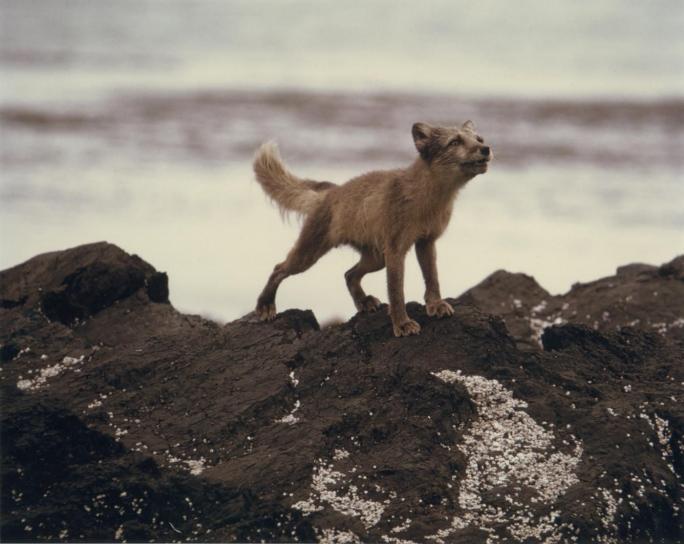
The Arctic fox (Vulpes lagopus) is a small omnivorous fox native to the Arctic regions of the Northern Hemisphere, renowned for its remarkable seasonal camouflage and extraordinary cold tolerance. This resilient canid has evolved a suite of adaptations allowing it to survive in one of Earth’s harshest environments.
Physical Characteristics
The Arctic fox is one of the smallest members of the Canidae family, with adults weighing between 2.5 and 9 kilograms (5.5 and 20 pounds) and measuring 75 to 100 centimeters (30 to 39 inches) in total length, including a 30-centimeter bushy tail. Its compact body, short legs, and small rounded ears minimize heat loss through a principle known as Allen’s rule.
One of the Arctic fox’s most remarkable adaptations is its seasonal coat change. In winter, it wears a thick, luxurious white or cream-colored fur that provides both insulation and camouflage against the snow. In summer, the coat transitions to a shorter, darker brown or grey layer that blends with tundra vegetation. The Arctic fox’s fur is among the warmest of any mammal, and it can endure temperatures as low as minus 50 degrees Celsius without significantly increasing its metabolic rate.
Habitat and Distribution
Arctic foxes are found throughout the Arctic tundra regions of North America, Europe, and Asia, including Scandinavia, Russia, Alaska, Canada, and Greenland. They inhabit treeless Arctic zones including coastal plains, open tundra, and sea ice environments. During winter, some Arctic foxes follow polar bears onto the sea ice, scavenging seal carcasses left by the larger predator.
Diet
Arctic foxes are opportunistic omnivores with a diverse diet that varies by season. Their primary prey includes lemmings and other rodents, which can constitute up to 95% of their diet during peak years. They also eat Arctic hares, birds and their eggs, fish, and carrion. They cache surplus food beneath the snow for later consumption, an important survival strategy during the Arctic winter.
Reproduction
Arctic foxes form monogamous pairs and breed once per year. Clutches of 5 to 10 pups (occasionally up to 25, among the largest of any canid) are born after a 52-day gestation in dens dug into permafrost. Both parents participate in raising the young, which are weaned at around 6 weeks and learn to hunt by late summer.
Conservation
The Arctic fox is listed as Least Concern globally, though some populations—particularly in Scandinavia—are considered Near Threatened due to overhunting and habitat change. Climate change poses an emerging threat, as warming temperatures may alter prey availability and increase competition with the expanding red fox.