 By st20113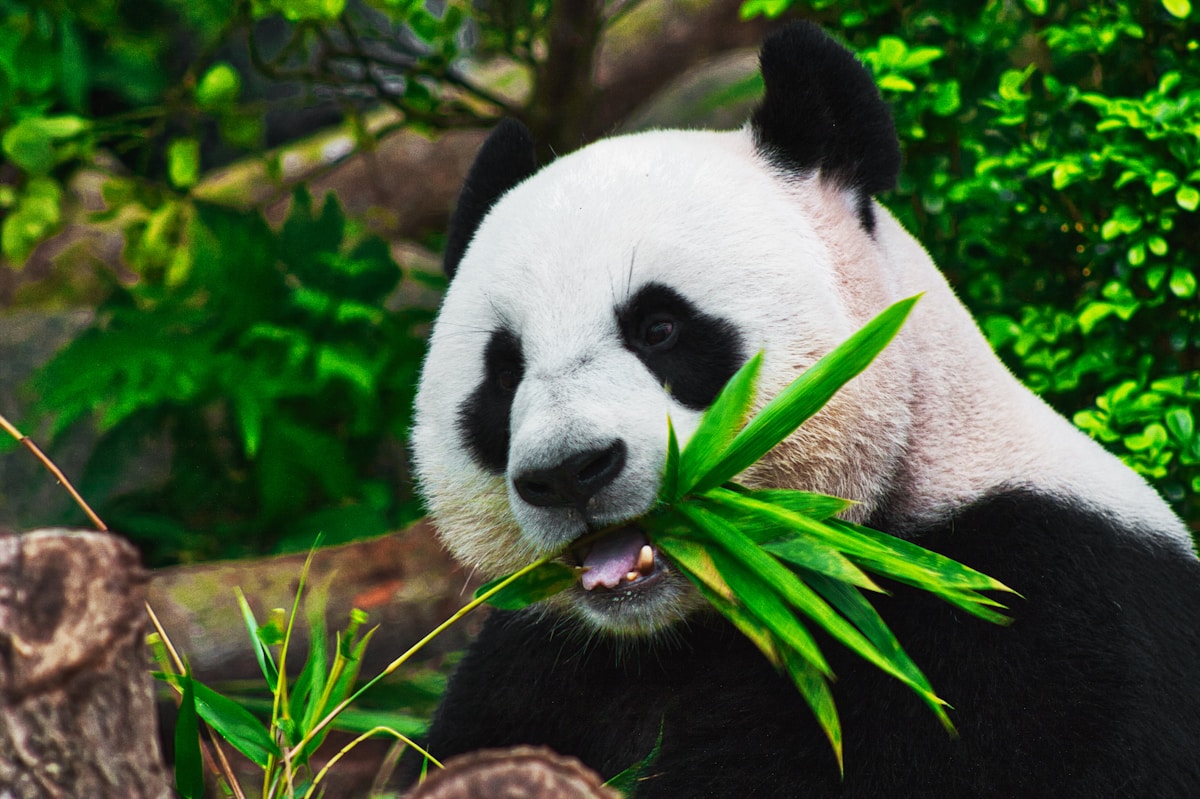
The giant panda (Ailuropoda melanoleuca) is one of the world’s most beloved species, a bear native to south-central China renowned for its distinctive black-and-white coloration. Once on the brink of extinction, the giant panda has become a symbol of successful wildlife conservation.
Physical Characteristics
Adult giant pandas weigh between 70 and 125 kilograms (154 and 276 pounds), with males being about 10 to 20% larger than females. Standing 60 to 90 centimeters (24 to 35 inches) at the shoulder, they measure 1.2 to 1.9 meters (4 to 6.2 feet) in length. Their iconic black-and-white coloration features black patches around the eyes, ears, shoulders, and legs on a predominantly white body.
Despite being classified as carnivores, giant pandas have a diet that is over 99% bamboo, consuming 12 to 38 kilograms (26 to 84 pounds) of bamboo shoots, stems, and leaves daily. Their wrist bones are modified into a pseudo-thumb—a bony protrusion covered in a padded pad that allows them to grip bamboo stalks with remarkable dexterity.
Habitat and Distribution
Giant pandas are found in mountainous forest regions of central China, primarily in Sichuan, Shaanxi, and Gansu provinces. These mountainous forests feature a temperate climate with abundant bamboo growth. Historically, giant pandas ranged across much of southern and eastern China, but habitat loss has fragmented their range into six isolated mountain ranges.
Diet Specialization
Giant pandas have large, round molars and powerful jaw muscles adapted for crushing tough bamboo fibers. Despite being classified as carnivores, they have lost the gene for a functional digestive enzyme, making them poorly adapted to a carnivorous diet. Each day, they spend 10 to 16 hours feeding, consuming up to 38 kilograms of bamboo to meet their nutritional needs.
Behavior and Reproduction
Giant pandas are solitary animals, with adults coming together only during the brief breeding season from March to May. Females have a fertility window of only 2 to 3 days per year. After a gestation of 95 to 160 days, a female gives birth to one or two cubs, though twins are common and the mother typically raises only one cub. Newborn cubs are extremely small (about 15 centimeters and 100 grams), pink, blind, and helpless.
Conservation Success Story
The giant panda was reclassified from “Endangered” to “Vulnerable” on the IUCN Red List in 2016, reflecting decades of intensive conservation efforts. China’s panda conservation program has established over 60 nature reserves covering approximately 67% of the giant panda’s habitat, and the global captive breeding population has grown substantially.