 By st20113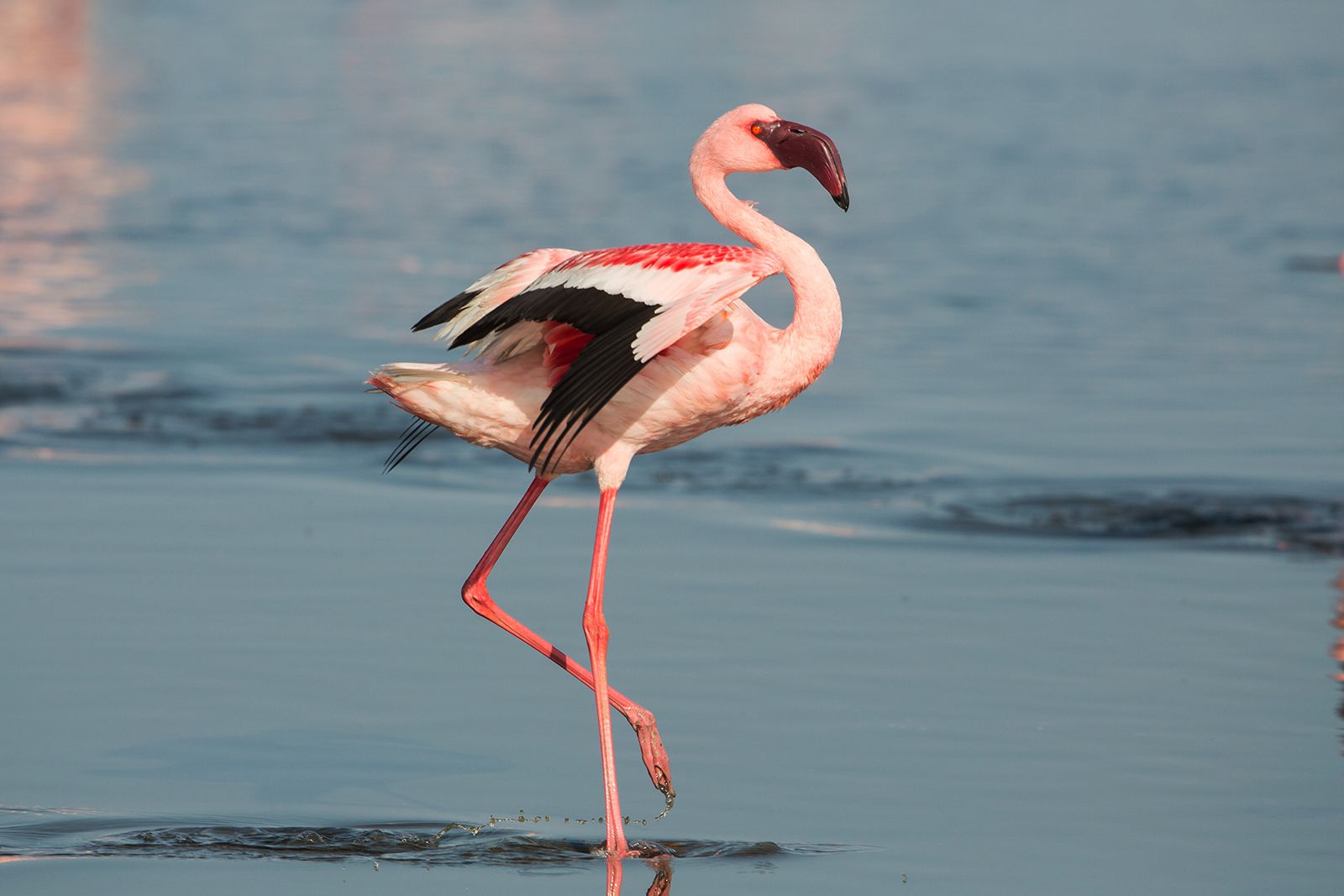
Flamingos are a family of tall, brightly colored wading birds known for their long legs, S-shaped necks, and distinctly downward-bent bills. Found on saline and alkaline lakes, lagoons, and estuaries on every continent except Antarctica, flamingos are among the most visually striking birds in the world and an important part of their aquatic ecosystem.
Physical Characteristics
Standing 0.9 to 1.5 meters tall, flamingos are built for wading. Their characteristic pink, orange, or red plumage comes from carotenoid pigments in their diet of algae and brine shrimp. Their unusual bill is bent downward to filter food from water and mud; dense lamellae strain out small organisms while expelling silt. They often stand on one leg, a behavior that may conserve body heat.
Feeding
Flamingos are filter feeders. They stir up mud with their feet, then sweep their submerged bills side to side, pumping water through the lamellae to trap diatoms, larvae, and tiny crustaceans. Different species specialize in different depths and prey, allowing several kinds to coexist in the same lake without competing directly.
Social Behavior
Flamingos are intensely social, nesting and feeding in colonies that can number in the tens or hundreds of thousands. Such gatherings offer safety from predators and improve foraging success through collective movement. During breeding, pairs build conical mud nests, and both parents incubate the single chalky-white egg and feed the chick with a nutritious crop milk.
Migration and Habitat
Many flamingo populations are nomadic, moving between alkaline lakes as water levels and food supplies shift. These shallow, often hypersaline wetlands are harsh for most wildlife but ideal for flamingos, which tolerate conditions that exclude competitors and predators.
Conservation Status
Some flamingo species are widespread, but others-such as the Andean and Chilean flamingos-are considered Near Threatened or Vulnerable. Threats include habitat loss from mining and agriculture, water diversion, and disturbance of nesting colonies. Protected wetland reserves are vital to their continued abundance.
Flamingos transform stark, salty lakes into spectacles of color and life. Their vast flocks are living indicators of the health of the world’s most extreme wetlands.