 By st20113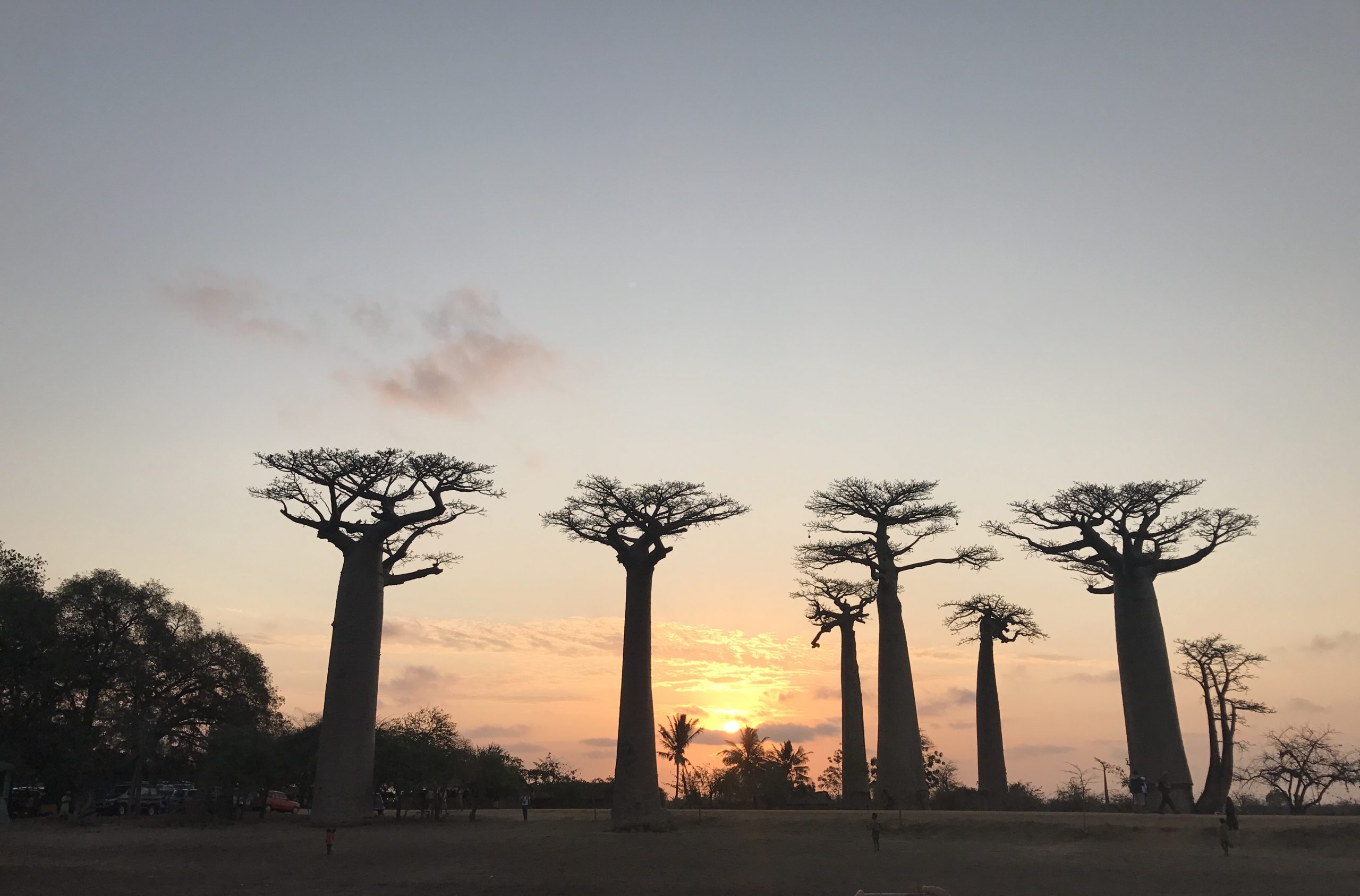
The Baobab (Adansonia digitata), known as the “Tree of Life” or “Upside-Down Tree,” is one of the most distinctive and ancient trees on Earth. Found throughout the hot, arid savanna regions of sub-Saharan Africa, the baobab is instantly recognizable by its massively swollen trunk — which can reach 10–14 meters (30–47 feet) in diameter — and its sparse, crown of barren-looking branches that during the leafless dry season resemble roots reaching upward, giving rise to its evocative nickname. Some individual baobab specimens are estimated to be over 2,000 years old, making them among the longest-living organisms on the African continent, with one famous specimen in South Africa nicknamed “Holtsman’s Tree” estimated to be approximately 6,000 years old.
Physical Characteristics
The baobab’s extraordinary appearance is the result of remarkable adaptations to the extreme conditions of the African savanna. Its massive trunk, which can hold thousands of liters of water, serves as a natural reservoir enabling the tree to survive prolonged droughts lasting several years. The trunk’s soft, spongy wood is capable of expanding dramatically after rains and contracting during dry periods without damage. The bark is smooth and grey-brown, fire-resistant, and can regenerate rapidly if damaged. During the rainy season, the baobab produces large, palmate leaves that provide dappled shade beneath its expansive crown, but during the 8–9 month dry season, the tree drops its leaves entirely, presenting its skeletal silhouette against the African sky.
The baobab produces spectacular, pendulous white flowers — up to 20 cm in diameter — that open at night and are pollinated primarily by fruit bats (the African straw-coloured fruit bat, Eidolon helvum) as well as moths and other nocturnal insects. The fruit is a large, hard-shelled oblong capsule covered in velvety hair, containing pulp-rich seeds embedded in a powdery white substance that is rich in vitamin C, calcium, and iron. The seeds are dispersed primarily by animals — baboons, antelopes, and bushbabies eat the fruit pulp, while in some regions humans consume and trade the nutrient-dense fruit.
Ecological Significance
The baobab is a keystone species in the African savanna ecosystem, supporting an extraordinary diversity of animal life. Elephants — including the African Elephant (Loxodonta africana) — are particularly important ecological partners with the baobab. Elephants frequently strip baobab bark and knock down entire baobab branches to access water stored in the trunk, effectively pruning the trees in ways that can stimulate flowering and fruit production. In turn, the baobab’s hollowed trunks often provide shelter for a range of animals: African rock pythons, owls, parakeets, and bats are among the dozens of species known to nest, roost, and shelter in baobab cavities. The African Elephant’s role as a major baobab consumer and disperser illustrates the deep interconnectedness of the African savanna food web.
Beyond elephants, the baobab’s ecological importance extends across the entire savanna community. The honey bee often nests in baobab hollows, and baobab flowers provide important nectar and pollen resources during the dry season when few other plants are blooming. Birds including hornbills, rollers, and weavers nest in baobab cavities and forage among its branches. The dry fruit pulp and seeds are consumed by numerous mammal species, making the baobab a critical food resource during the lean dry season months.
Cultural and Economic Importance
Baobab trees have been central to African communities for millennia, providing food, water, medicine, and shelter. Every part of the baobab is utilized: the fruit pulp is consumed fresh and processed into juice, and the seeds are roasted and pressed for oil. The leaves are cooked as a vegetable and used in traditional medicine to treat fever, diarrhoea, and inflammation. The bark is harvested for rope and cloth, while the tree’s abundant water reserves have saved countless travellers and their livestock from death by thirst. In Madagascar — home to six endemic baobab species — the trees hold profound spiritual significance for local communities, with some baobabs believed to be the dwelling places of ancestors.
Modern research has validated many traditional uses of baobab products. Baobab fruit pulp is among the richest natural sources of vitamin C (containing 6 times more than oranges by weight), and its high antioxidant content has attracted interest from the functional foods and cosmetics industries. However, this commercial interest also poses risks: unsustainable harvesting of baobab bark can kill trees, and climate change-driven shifts in rainfall patterns threaten the survival of baobab populations throughout their range. Several baobab species are now classified as endangered, underscoring the urgent need for conservation efforts.
[…] but forage mainly on the ground, where they move with a characteristic bounding gait. The sacred baobab trees of the region provide important roosting and shading […]
[…] tree shares the genus with the Baobab of mainland Africa. That tree grows in dry savannah. Its trunk is shorter and much thicker. Our […]