 By st20113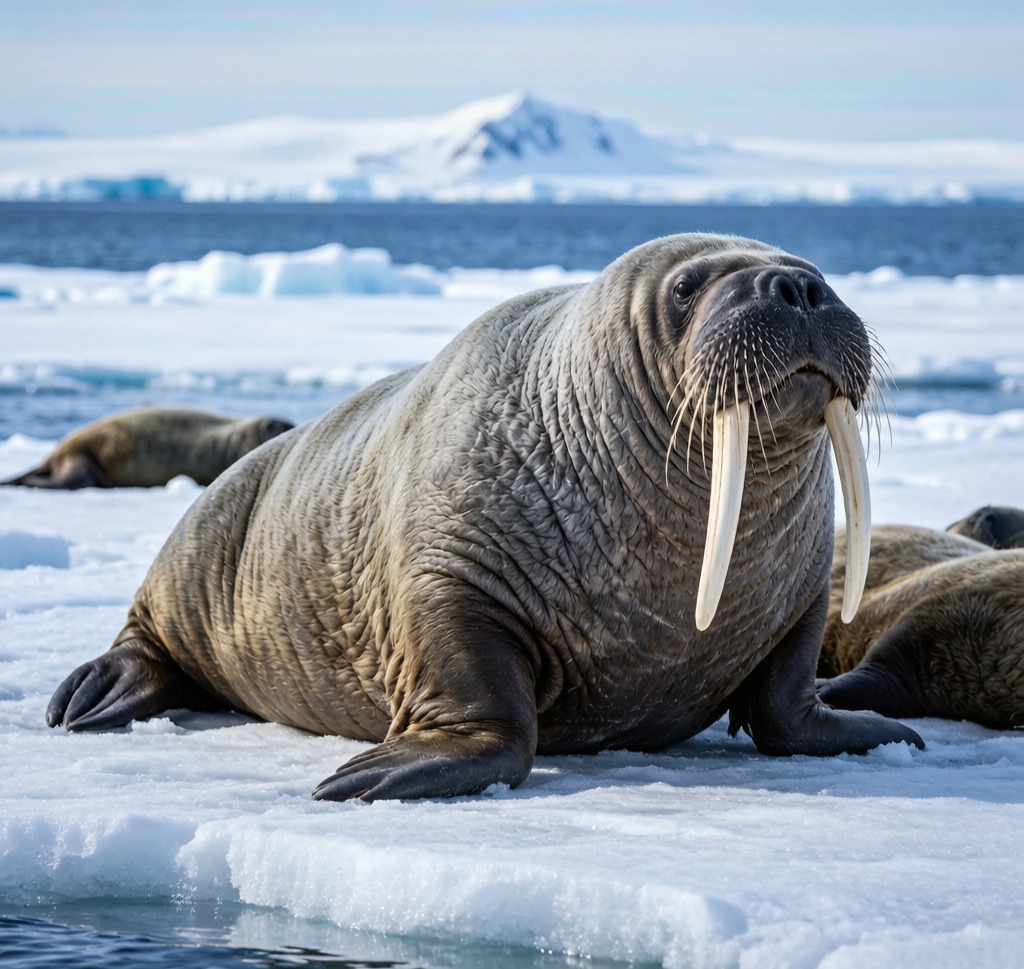
A Pacific Walrus (Odobenus rosmarus divergens) hauled out on sea ice in the Chukchi Sea, Alaska
Overview
The Walrus (Odobenus rosmarus) is a massive pinniped – the second largest seal in the world after the elephant seals – inhabiting the cold waters of the Arctic Ocean and sub-Arctic seas of the Northern Hemisphere. Instantly recognizable by its enormous size, wrinkled brownish-gray skin, and magnificent long ivory tusks, the walrus is a keystone species of the Arctic marine ecosystem.
Adult walruses are imposing animals. Males (bulls) can weigh up to 1,700 kilograms and measure up to 3.6 meters in length, while females (cows) are considerably smaller, typically reaching 900 kilograms and 3.1 meters. Both sexes possess the characteristic long tusks, which are elongated canine teeth that can grow up to one meter in length in adult males. The tusks serve multiple purposes: breaking breathing holes in ice, hauling the massive body onto ice floes, and as weapons in dominance disputes between males. Walruses have a highly wrinkled, thick skin that can be up to 10 centimeters deep.
Distribution and Habitat
There are two recognized subspecies: the Atlantic Walrus (O. r. rosmarus), found from the Canadian Arctic east to the Kara Sea in Russia, and the Pacific Walrus (O. r. divergens), found in the Bering, Chukchi, and Laptev Seas. Pacific walruses undertake one of the most dramatic animal migrations in the Arctic – in autumn, as sea ice forms, hundreds of thousands of walruses gather on land in enormous haul-outs that can number over 100,000 individuals.
Walruses are closely tied to sea ice throughout the year, using it as a platform for resting, giving birth, nursing, and as a refuge from predation by killer whales and polar bears. As climate change reduces Arctic sea ice extent and duration, walrus populations face increasing pressure. In years of early ice melt, walruses are forced to haul out on land in greater numbers, leading to dangerous stampedes that can kill hundreds of calves.
Diet and Feeding
Walruses are primarily benthic feeders, diving to the seafloor to forage for bivalve mollusks, worms, sea cucumbers, shrimp, and other invertebrates. They can dive to depths of over 180 meters and stay submerged for up to 30 minutes, using their extremely sensitive whiskers (vibrissae) to locate prey in the dark, muddy bottom sediments. They use suction to draw prey into their mouths, and the muscular lips and tongue help manipulate and consume bivalve shells.
While bivalves form the majority of their diet, walruses are opportunistic and will also prey on fish, seals (particularly ringed and bearded seals), and seabirds when the opportunity arises. Adult male walruses have been documented actively hunting and eating seals. The caloric demands of walruses are enormous – an adult male may consume 30 to 50 kilograms of food per day to sustain its massive body.
Social Behavior
Walruses are highly social animals that form large, dense aggregations on sea ice and on land. These haul-outs can include tens of thousands of individuals crowded together in sometimes chaotic groups. Within these gatherings, smaller groups of related females and their young form stable units, while adult males tend to associate in bachelor groups outside the breeding season.
Communication between walruses involves a wide range of vocalizations including grunts, coughs, belches, and distinctive clacking sounds made by the tusks. Males produce complex vocalizations during the breeding season in underwater leks, where they compete for access to females through display and occasional combat. Walruses are also known for their loud, distinctive roar that can be heard above and below water.
Reproduction and Lifespan
Walruses have a remarkably slow reproductive rate. Females give birth to a single calf every 2 to 3 years, after a gestation period of approximately 15 to 16 months (including delayed implantation). Calves are born on sea ice between April and June, weigh about 60 kilograms at birth, and are able to swim within hours. They nurse for over a year, sometimes up to 2 years, and the strong mother-calf bond is critical to calf survival in the harsh Arctic environment.
Walruses are long-lived animals, with individuals known to survive over 40 years in the wild. Females reach sexual maturity at around 6-7 years, while males do not successfully breed until they are large enough to compete for females – typically around 15 years of age. Natural predators include killer whales and polar bears (which mainly target calves), and walruses have been observed killing polar bears that attack them with their tusks.