 By st20113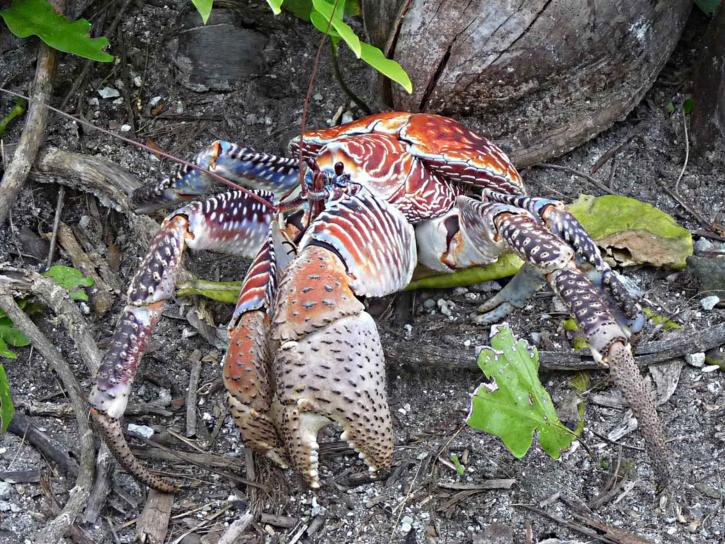
The Coconut Crab (Birgus latro), also known as the Robber Crab, is the world’s largest terrestrial arthropod, belonging to the family Coenobitidae. This remarkable crustacean can weigh up to 4.1 kg (9 lbs) and measure up to 1 meter (3.3 ft) in leg span, making it the largest land invertebrate on Earth.
Physical Characteristics: The Coconut Crab possesses a powerful exoskeleton that varies in color from bluish-gray to reddish-brown. Its most distinctive features are its massive claws (chelipeds), with the larger left claw capable of exerting a force of up to 3,300 newtons—strong enough to crack open coconuts. Unlike most hermit crabs, adult Coconut Crabs do not carry shells on their backs. Their compound eyes are reddish and provide excellent vision.
Habitat and Distribution: Coconut Crabs are native to islands across the Indian Ocean and the western Pacific Ocean, including Indonesia, the Philippines, the Seychelles, and many Pacific island nations. They are absent from mainland continents, having evolved exclusively on oceanic islands.
Behavior and Diet: Coconut Crabs are omnivorous and opportunistic feeders. Their diet includes fruits, seeds, nuts (especially coconuts), carrion, and occasionally other crabs and small animals. They are primarily nocturnal and can climb trees up to 6 meters high to access food.
Reproduction: Mating occurs on land, after which the female releases larvae into the ocean. After several planktonic stages, the juveniles return to land. This biphasic life cycle connects terrestrial adults with a marine larval stage.
Conservation Status: Listed as Vulnerable by the IUCN. Threats include habitat loss, human harvesting for food, and predation by introduced species. Their slow growth rate (4–6 years to sexual maturity) makes populations particularly vulnerable to overharvesting.