 By st20113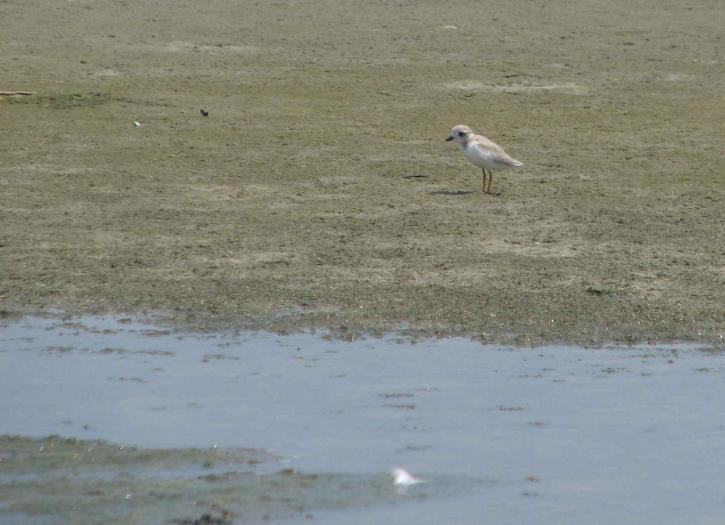
The snowy plover (Charadrius nivosus) is a small shorebird species found along sandy beaches, salt flats, and lake shores in the Americas, Europe, and parts of Asia. Known for its elusive nature and cryptic camouflage against sandy substrates, this compact plover occupies challenging coastal and alkaline habitats that are increasingly threatened by human activity.
Physical Characteristics
Snowy plovers are among the smallest shorebirds, measuring 15 to 17 centimeters (6 to 7 inches) in length and weighing 35 to 58 grams (1.2 to 2 ounces). They have a compact, rounded body with relatively long greyish legs and a short, black-tipped bill.
Plumage varies by subspecies. In North America, breeding adults have a white forehead patch, dark shoulder patches, and a dark eye line contrasting with a white face. The upperparts are greyish-brown and the underparts are white. Non-breeding birds are more uniformly grey-brown with reduced head markings.
Habitat and Distribution
Snowy plovers inhabit expansive sandy beaches with sparse vegetation, salt flats, alkaline lake margins, and recently disturbed coastal areas. They avoid densely vegetated or rocky shorelines in favor of open, hard-packed sand where foraging is efficient. The North American subspecies breeds along the Gulf Coast from Texas to Florida and along the Pacific coast from Washington to Baja California, with inland populations in the Great Plains and Southwest.
Foraging Behavior
Snowy plovers forage by sight on sandy and muddy substrates, running in short bursts and pausing to peck at prey at the water’s edge or in damp sand. Their diet consists primarily of small invertebrates including marine worms, crustaceans, insects and their larvae, and small mollusks. They are diurnal foragers but may also feed at night during high tides.
Breeding
Snowy plovers nest on open sandy beaches and salt flats, where the eggs and chicks are exceptionally well-camouflaged against the substrate. Clutches typically contain 2 to 3 eggs, incubated by both parents for approximately 26 to 33 days. Precocial chicks leave the nest within hours of hatching, following their parents to foraging areas. Like many beach-nesting birds, snowy plovers employ distraction displays to lure predators away from nests and chicks.
Conservation
The snowy plover is listed as Near Threatened globally on the IUCN Red List. Major threats include human disturbance and development of beach habitat, predation by introduced mammals (dogs, cats, rats), and habitat degradation from shoreline armoring and recreational activities. Conservation measures include beach closures during breeding season, predator control, and habitat restoration projects.
[…] is the close relative of the Snowy Plover (Charadrius nivosus). That small, pale bird lives on American coasts and salt flats. It shares the same breast band. It […]