 By st20113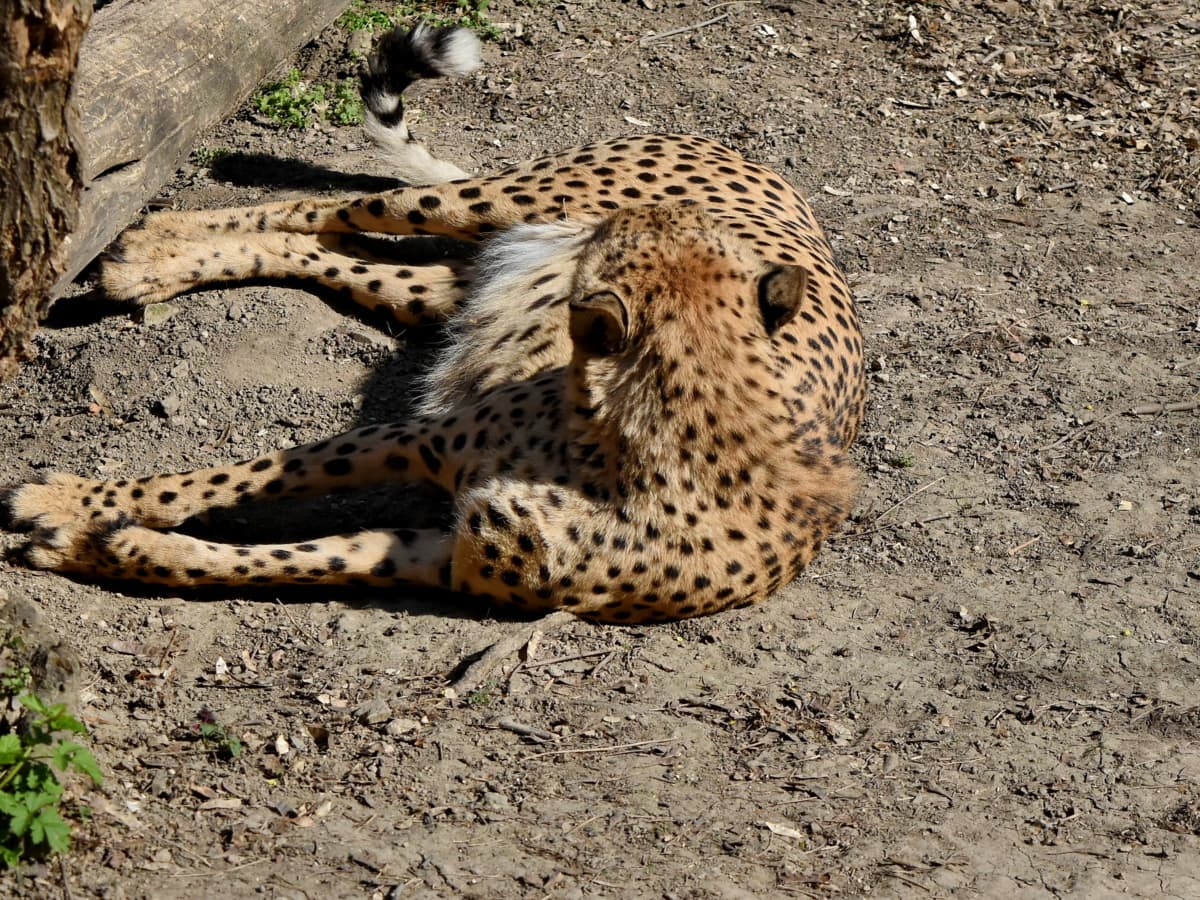
The cheetah (Acinonyx jubatus) is the world’s fastest land animal, capable of reaching speeds of 80 to 128 kilometers per hour (50 to 80 mph) in short bursts covering distances up to 500 meters (1,640 feet). This large cat is uniquely adapted for speed, making it one of the most remarkable predators in the animal kingdom.
Physical Characteristics
Cheetahs have a slender, aerodynamic body built for speed. Adults stand 67 to 94 centimeters (26 to 37 inches) at the shoulder and weigh 21 to 72 kilograms (46 to 159 pounds), with males being slightly larger than females. Their golden-yellow coat is covered with approximately 2,000 solid black spots, each unique to the individual like a human fingerprint.
A distinctive black “tear line” runs from each eye to the mouth—thought to help reduce glare from the African sun and enhance daytime vision. Cheetahs have a small head, high-set eyes for wide-angle vision, and a flattened ribcage for increased lung capacity during sprints.
Unlike other big cats, cheetahs cannot fully retract their claws—a unique adaptation providing extra grip during high-speed chases. Their long, muscular tail acts as a rudder for balance and direction changes.
Speed Mechanics
The cheetah’s incredible speed is achieved through specialized adaptations: enlarged adrenal glands for rapid energy release, an enlarged heart and lungs for maximum oxygen intake, and a semi-rigid spine that acts like a spring during each stride, enabling stride lengths of up to 7 meters (23 feet) at top speed. During a sprint, a cheetah can take up to 4 strides per second, with each stride lasting less than a quarter of a second.
Habitat and Distribution
Cheetahs historically ranged across most of Africa and into the Middle East and Central Asia. Today, they are found primarily in sub-Saharan Africa, with small populations in Iran. Preferred habitats include open savannas, grasslands, scrubland, and semi-desert regions where their speed is an effective hunting strategy.
Hunting Behavior
Cheetahs are primarily diurnal hunters, with peak activity during dawn and dusk. They use exceptional eyesight to scan the landscape before initiating a high-speed chase, covering prey from within 50 to 100 meters. Unlike other big cats, cheetahs rarely scavenge and cannot defend kills against larger predators. After a successful hunt, cheetahs must feed quickly before lions or hyenas arrive to steal their prey.
Conservation
The cheetah is listed as Vulnerable on the IUCN Red List, with fewer than 7,000 individuals remaining in the wild. Major threats include habitat loss, human-wildlife conflict, illegal wildlife trade, and remarkably low genetic diversity—a cheetah population bottleneck in the last Ice Age left the species genetically uniform, making it susceptible to disease.