 By st20113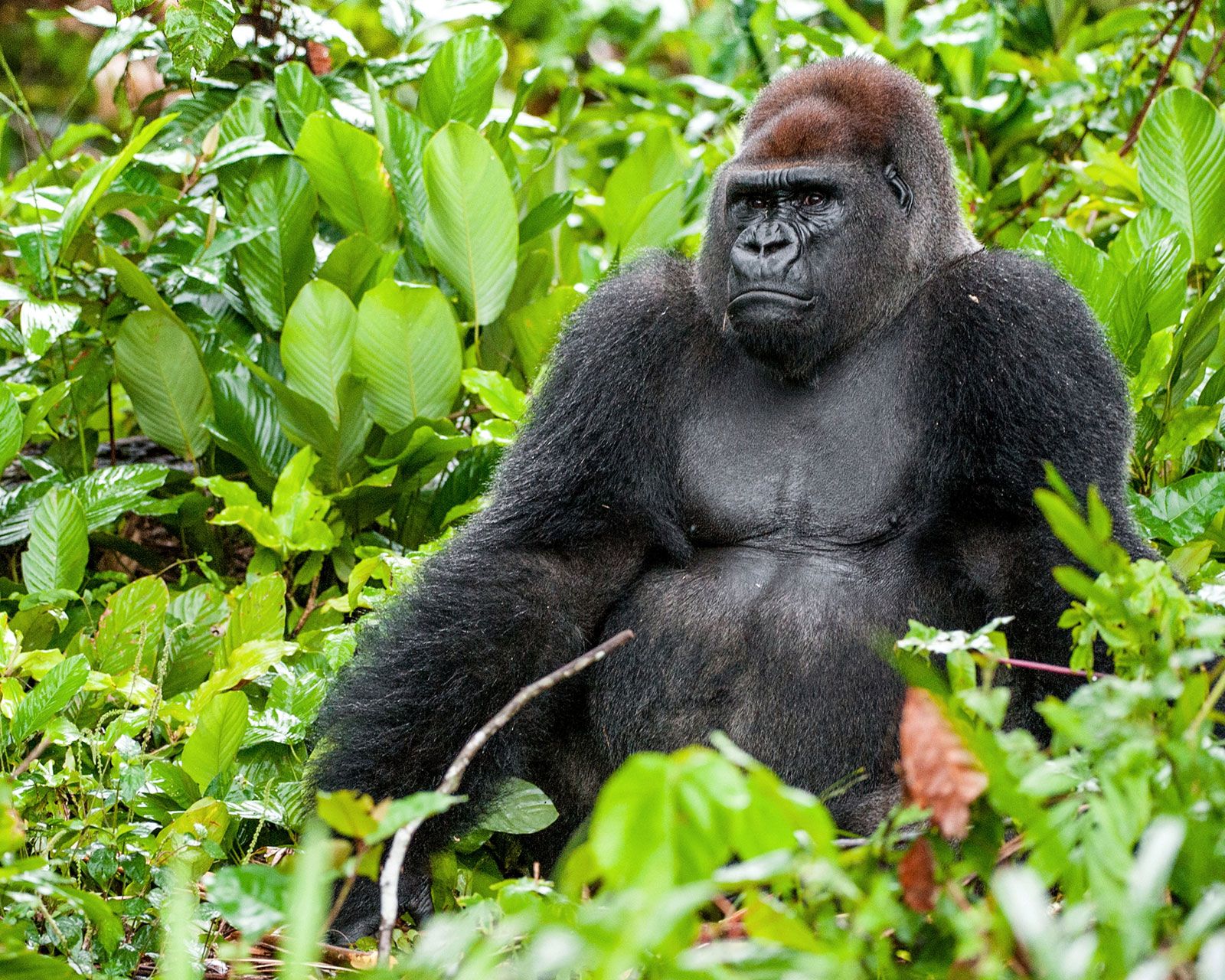
The gorilla is the largest living primate and one of our closest relatives, sharing about 98 percent of its DNA with humans. These powerful yet gentle apes inhabit the forests of central and western Africa, where they are keystone herbivores that shape the structure of their ecosystem through seed dispersal and vegetation browsing.
Physical Characteristics
Adult male gorillas, known as silverbacks for the saddle of silver hair on their backs, can weigh 160-200 kilograms and stand 1.7 meters tall when upright. Females are roughly half the size. Their long arms, broad chests, and powerful jaws reflect a life spent foraging and moving on all fours (knuckle-walking). Thick fur ranges from black to brownish-gray depending on species and altitude.
Social Structure
Gorillas live in stable family groups led by a dominant silverback who defends the group, mediates conflicts, and decides when to travel and rest. Groups include several adult females, their offspring, and sometimes subordinate males. Like the orangutan, gorillas are highly intelligent, using tools, exhibiting individual personalities, and forming deep social bonds.
Diet and Behavior
Gorillas are primarily herbivorous, eating leaves, shoots, stems, fruit, and bark. Despite their fearsome reputation, they are generally calm and shy. They build nests each night from branches and leaves, both on the ground and in trees. Vocalizations, gestures, and chest-beating by silverbacks communicate status and warn of threats.
Reproduction and Lifespan
Females give birth to a single infant after about 8.5 months of gestation. Infants cling to their mother’s fur for months and remain dependent for years. In the wild, gorillas may live 35-40 years. Slow reproduction makes populations especially vulnerable to losses.
Conservation Status
All four gorilla subspecies are classified as Critically Endangered or Endangered. The primary threats are habitat destruction from logging and agriculture, hunting for bushmeat, and disease-particularly Ebola, which has devastated some populations. Ecotourism and protected reserves offer hope, but continued investment is essential.
Gorillas remind us of our shared evolutionary heritage and the fragile beauty of African forests. Their survival is intertwined with the protection of the rainforests that shelter countless other species.
[…] humans, Bornean orangutans play a vital role in the health of tropical rainforest ecosystems. The gorilla and orangutan share a common ancestry within the great ape family, yet orangutans are unique for […]
[…] close relatives, though they are more resilient in disturbed habitats than many apes such as the gorilla. Their success across such varied environments makes them a model species for studying primate […]
[…] local welfare to forest protection has proven the most durable safeguard for wild chimpanzees. The gorilla and the bonobo face similar pressures as fellow African […]