 By st20113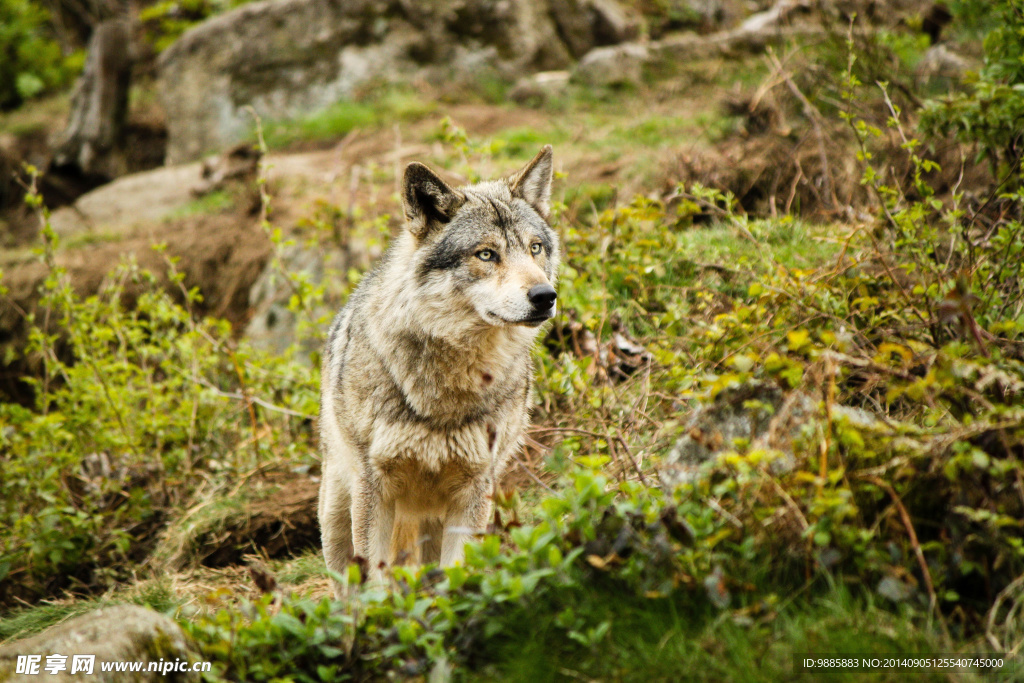
The Gray Wolf (Canis lupus), also known as the Timber Wolf, is the largest member of the Canidae family and one of the most ecologically significant predators in the Northern Hemisphere. Native to the wilderness and remote areas of North America, Eurasia, and the Middle East, the Gray Wolf has played a defining role in the ecological and cultural history of humanity – revered in mythology, demonized as a livestock killer, and ultimately recognized as a keystone predator whose presence cascades through entire ecosystems to maintain biodiversity and ecological balance. Once ranging across virtually all of the Northern Hemisphere, Gray Wolf populations were devastated by systematic persecution throughout the 18th, 19th, and 20th centuries, with the species eliminated from most of its historical range in western Europe, the continental United States, and much of Mexico. Today, with careful conservation efforts, Gray Wolf populations are recovering in parts of their former range, offering one of the most compelling case studies in large carnivore restoration.
Pack Structure and Social Behavior
Gray Wolves live in highly organized family groups called packs – typically comprising 4-15 individuals, though packs of over 30 have been documented in exceptional prey-rich environments. A pack is led by an alpha pair – the breeding male and female – who are typically the parents of most or all other pack members, creating a family structure in which offspring from previous years (called “helper wolves”) assist in raising the next generation of pups. This cooperative breeding system, in which multiple pack members share the responsibilities of hunting, pup-rearing, and territorial defense, is one of the most sophisticated social structures among non-human animals and parallels the cooperative societies of African Wild Dogs and some populations of African Wild Dogs. The alpha pair’s offspring may remain in the pack for 1-3 years before dispersing to find mates and establish new territories, a process that drives population growth and genetic exchange across the landscape.
Gray Wolves communicate through a rich repertoire of vocalizations, body postures, scent marking, and facial expressions. Their iconic howl – a long-distance vocalization that can carry up to 10 km through the forest – serves multiple functions: coordinating pack movements across vast territories, reinforcing social bonds, advertising territorial ownership to rival packs, and possibly synchronizing hunting activities. Unlike the cooperative hunting of African Wild Dogs, which use endurance-based pursuit over open terrain, Gray Wolves in forested environments typically hunt by ambush, using the landscape’s cover to get close to prey before launching a coordinated attack. In open environments like the Arctic tundra, Gray Wolves more closely parallel African Wild Dogs in their pursuit-based hunting style.
Ecological Role: The Keystone Predator
The Gray Wolf’s role as a keystone predator – a species whose influence on the ecosystem is disproportionate to its numerical abundance – has been dramatically demonstrated in Yellowstone National Park, where the reintroduction of Gray Wolves in 1995 triggered one of the most-studied ecological cascades in history. Before wolf reintroduction, overbrowsing by elk had devastated riparian vegetation along Yellowstone’s rivers, causing severe erosion and altering river courses. After wolves returned, elk behavior changed: elk avoided browsing in valley bottoms and riparian areas, allowing vegetation to recover. The recovery of vegetation stabilized riverbanks, cooled water temperatures through shade, and improved habitat for fish, beavers, and countless other species – demonstrating the concept of a trophic cascade, in which the top predator’s influence flows down through multiple trophic levels to shape the entire ecosystem.
Gray Wolves primarily hunt large ungulates: elk, moose, deer, bison, and caribou, depending on geographic range. A pack can take prey ranging from a single elk (200-320 kg) to a moose (450-700 kg), with hunting success rates varying from approximately 10-30% depending on prey species, terrain, snow depth, and pack size. The wolves’ predation also provides an important food source for scavengers – including ravens, eagles, and bears – who follow wolf packs to feed on kills. This scavenging relationship connects the Gray Wolf to the broader carrion-based food web of the ecosystem, demonstrating the interconnected nature of predator and scavenger guilds.
Conservation and Human Conflict
Gray Wolves remain a species of intense conservation interest and political controversy. As a wide-ranging apex predator, Gray Wolves require vast tracts of connected habitat – often hundreds of kilometers – to maintain viable populations, bringing them inevitably into contact with human land use and livestock ranching. Conflicts with livestock producers – who view wolves as a threat to their herds – have driven much of the historical persecution of the species and continue to create significant tensions in regions where wolves are recovering. The management of Gray Wolf populations, including the question of whether they should be protected under endangered species legislation or managed as a game species, remains one of the most contentious issues in wildlife conservation.
Relatives of this animal include some of the most widespread terrestrial carnivores, such as the gray wolf, yet the two-toed sloth has adopted one of the most leisurely lifestyles of any mammal on Earth.
the moniker comes from its long, mobile, trunk-like nose that it uses to sniff out food. Like the gray wolf and other placental mammals, it is born relatively well-developed and belongs to the diverse group
and warm subtropical lowlands alike. Wild boar avoid open ground favored by predators such as the gray wolf, preferring thickets where it can melt from sight. Its flexibility has enabled successful
[…] is a highly social and endangered canid native to the forests and mountains of Asia. Smaller than a Gray Wolf but larger than a fox, the dhole is a formidable pack hunter capable of bringing down prey many […]
packs depending on conditions. They thrive in deserts, plains, forests, and cities alike. The gray wolf is its closest large relative, though the coyote is smaller and far more