 By st20113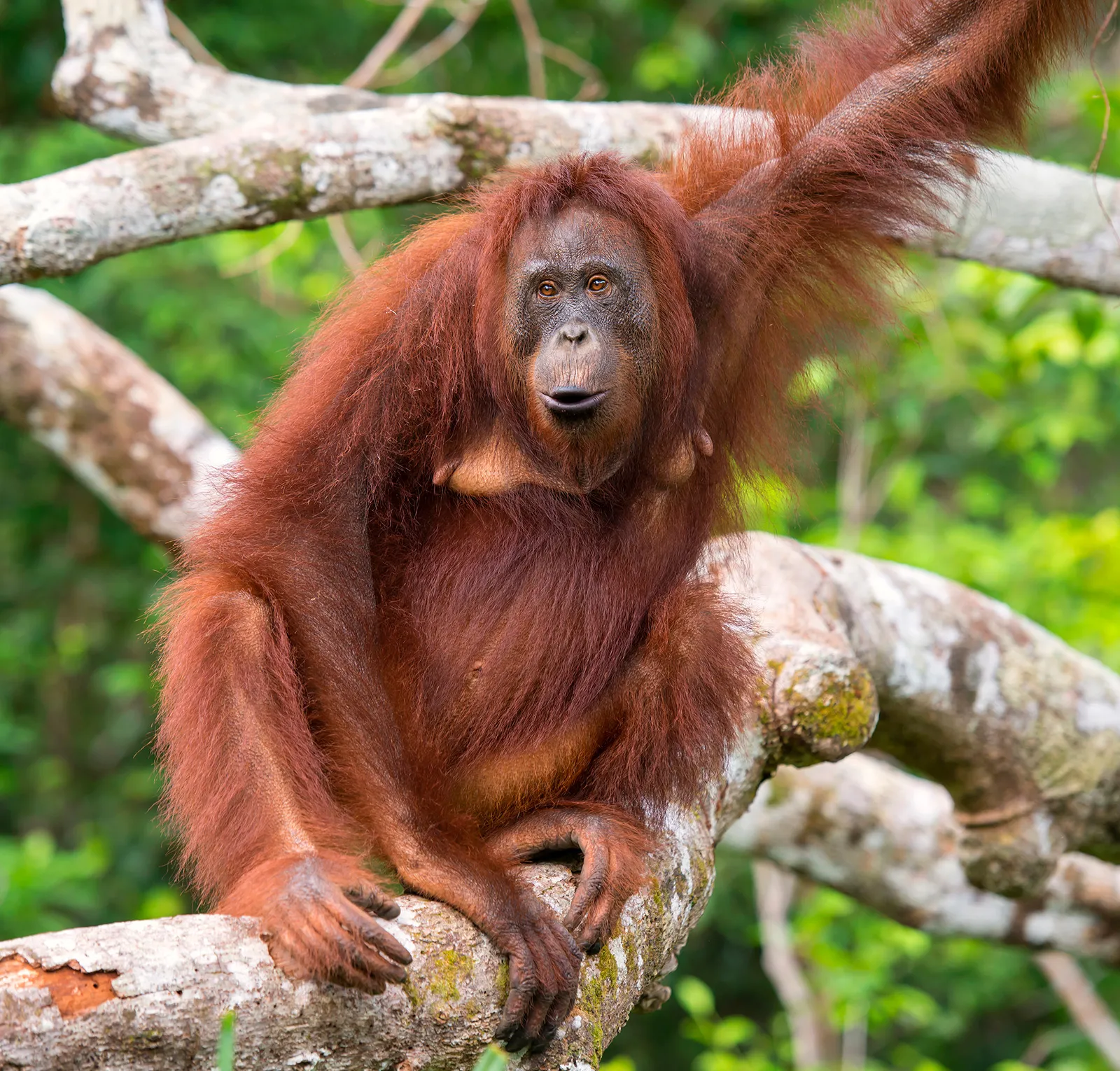
The Orangutans (Pongo spp.) — comprising the Bornean Orangutan (Pongo pygmaeus) and the critically endangered Sumatran Orangutan (Pongo abelii) and Tapanuli Orangutan (Pongo tapanuliensis, described only in 2017) — are the only great apes native to Asia, and among the most intelligent non-human animals on Earth. Found exclusively on the islands of Borneo and Sumatra in Southeast Asia, orangutans are the largest arboreal (tree-dwelling) mammals on Earth, spending approximately 90% of their time in the forest canopy, where they build elaborate sleeping nests each night from folded branches and leaves. With their distinctive reddish-brown hair, expressive faces, and remarkable cognitive abilities, orangutans are humanity’s closest relatives in Asia, sharing approximately 97% of their DNA with humans. Their name derives from the Malay and Indonesian words “orang” (person) and “hutan” (forest) — literally, “person of the forest” — a name that reflects both their human-like appearance and their profound dependence on the rainforest ecosystem.
Intelligence and Tool Use
Orangutans are widely regarded as the most intelligent of the great apes after the chimpanzee, with remarkable cognitive abilities that include spontaneous tool use, cultural transmission of learned behaviors, and complex social cognition. Wild orangutans have been documented using over 60 different types of tools in various contexts: sticks to extract insects and honey from tree hollows (a behavior that parallels how humans use tools), large leaves as “umbrellas” for rain shelter and “gloves” for handling thorny fruits, and leafy branches as “fly whisks” to swat insects. Perhaps most remarkably, tool-use behaviors differ between orangutan populations in different parts of Borneo and Sumatra — a form of culture in which socially learned behaviors spread through a population, just as human cultural traditions spread within human societies. This cultural variation among orangutan populations, documented through decades of field research, demonstrates that the capacity for culture is not unique to humans.
The cognitive abilities of orangutans are also evident in their capacity for sequential problem-solving and planning. Research in captivity has shown that orangutans can solve multi-step mechanical problems — such as constructing a compound tool from separate components to reach a food reward — and can plan for future events by selecting appropriate tools for problems they will face later. This level of cognitive sophistication rivals that of chimpanzees and, in some domains, exceeds it — making orangutans among the most cognitively advanced non-human animals on Earth and highlighting the extraordinary complexity of ecosystems that have produced such intelligent life forms.
Diet and Ecological Role
Orangutans are primarily frugivorous (fruit-eating), with fruit comprising approximately 65% of their diet in most areas. This fruit-eating behavior makes orangutans important pollination agents and seed dispersers in the Southeast Asian rainforest ecosystem. As orangutans travel through the forest consuming fruit, they swallow seeds that are later deposited in their droppings, often many kilometers from the parent tree — effectively planting new trees throughout the forest. This seed dispersal service is critical for the regeneration and maintenance of rainforest ecosystems, and the loss of orangutans from parts of their range has been linked to changes in forest composition and a reduction in the diversity of tree species. When fruit is scarce, orangutans supplement their diet with bark, leaves, insects, and occasionally small vertebrates — a dietary flexibility that helps them survive seasonal fruit shortages and illustrates the complex nutritional ecology of rainforest ecosystems.
Conservation Status
All three orangutan species are classified as Critically Endangered by the IUCN — the highest threat category before extinction in the wild — with combined wild populations estimated at approximately 100,000–120,000 individuals, down from an estimated 230,000 a century ago. The primary threat is habitat loss: approximately 80% of orangutan habitat has been destroyed in the past century, primarily due to the establishment of oil palm plantations, which has replaced vast swaths of lowland rainforest across Borneo and Sumatra. The remaining orangutan populations are fragmented into isolated forest patches, making genetic exchange between populations difficult and increasing the vulnerability of small, isolated groups to inbreeding, disease, and stochastic demographic events. Like the Red Panda and Tiger, orangutans face an extinction risk that is fundamentally linked to human activity and habitat destruction — and their conservation, like all large animal conservation, depends on the protection of vast areas of intact ecosystem.
[…] of which fragment and destroy the large, mature forest tracts that Gray Parrot populations require. Orangutans, countless bird species, and hundreds of plant species share this same habitat under the same […]
[…] Their nearest living cousins are the common chimpanzee, Pan troglodytes, and the tree-dwelling orangutan of Southeast Asia. A close relative within the same genus is the mountain gorilla, Gorilla […]
[…] coastal palm swamps, where it has evolved remarkable adaptations to a semi-aquatic lifestyle. The Orangutan shares Borneo as another endemic primate, while the proboscis monkey has carved out a unique […]
[…] Philippine tarsiers are haplorrhine primates sharing a more recent common ancestor with orangutans and humans than with strepsirrhine lemurs and lorises. The species occupies a unique position in […]